Servicemen of the Combined Arms Army of the Central Military District (CMD) have arrived in the Republic of Belarus to take part in the command-and-staff exercise with the CSTO Peacekeeping Forces “Indestructible Brotherhood-2026” and the special exercise with the CSTO joint NBC protection and medical support formation “Barrier-2026”.
On October 7, 2026, the Fourth Counter-Terrorism Forum opened in Minsk (Republic of Belarus), bringing together the CIS Conference on Countering Terrorism and Extremism, the SCO Regional Anti-Terrorist Structure international scientific and practical conference, and joint counter-terrorism exercises.
October 7 marks the 24th anniversary of the signing of the Charter of the Collective Security Treaty Organization, which formalized the establishment of the CSTO as an international regional organization. The goals set out in the document, including strengthening peace and stability and collectively protecting the independence, territorial integrity and sovereignty of the member states, remain the foundation for developing mutually beneficial, truly allied cooperation. On this basis, the Russian Federation is chairing the CSTO in 2026 under the motto “Collective security in a multipolar world: a common goal, shared responsibility.”
A discussion on countering illegal migration took place in Minsk
 14.12.2023
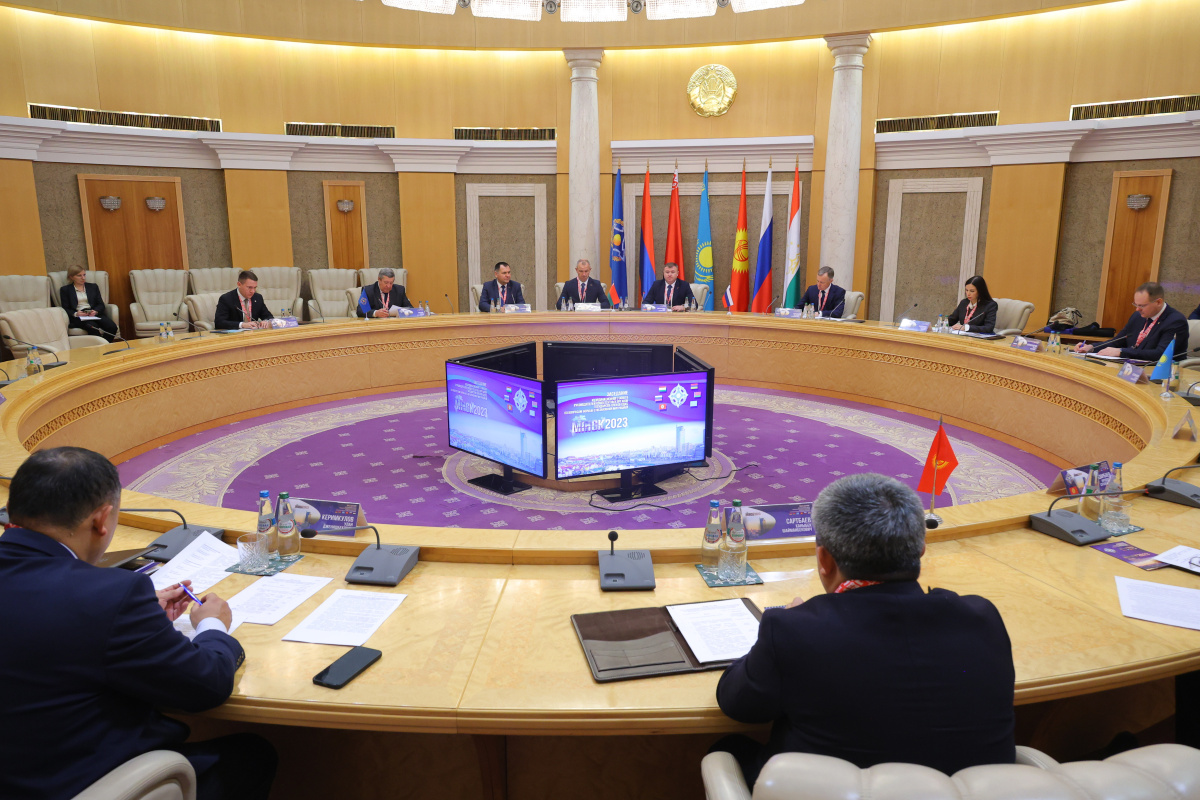
On December 13, 2023, Minsk hosted the 26th meeting of the Coordination Council of the Heads of the Competent Authorities for Countering Illegal Migration.
Delegations from the Republic of Kazakhstan, the Kyrgyz Republic, the Russian Federation, the Republic of Tajikistan, the Republic of Belarus and the CSTO Secretariat summarized the results of the CSTO regional operation "Illegal-2023" to combat illegal migration in 2023 and discussed the migration situation in the CSTO member states.
Opening the meeting, Yury Nazarenko, First Deputy Minister of Internal Affairs of the Republic of Belarus - Head of the Public Security Police, noted that in recent years the migration issue had become more and more topical and required certain measures to be taken both at the national and interstate levels. Changing geopolitical and economic realities were transforming migration processes very quickly, creating certain challenges and threats for each state. In this regard, according to the Deputy Minister of Internal Affairs of the Republic of Belarus, one should not forget the benefits that can be derived from orderly and regulated migration. That is why the elaboration of a single coordinated strategy is an integral part of overall success.
Experience was exchanged on issues of migration control in relation to foreigners, issuance of temporary residence permits and admission to citizenship in a simplified procedure, and combating illegal employment of migrant workers.
The parties also discussed various aspects of improving the activities of the Coordination Council. Particular attention was paid to the formation of common information resources, improving the quality and efficiency of interaction in identifying and suppressing channels of illegal migration.
A number of documents were signed as a result of the meeting.