On November 19, 2026, the 28th meeting of the Coordination Council of Heads of Competent Drug Control Authorities of the Member States of the Collective Security Treaty Organization (hereinafter referred to as the Coordination Council or the CSTO CCHCDCA) was held in Kazan as part of the Russian Federation’s chairmanship of the CSTO.
CSTO Secretary General Talatbek Masadykov expressed his condolences to Russian President Vladimir Putin following the crash of an An-12 military transport aircraft in the Kemerovo Region.
A working meeting between CSTO Secretary General Talatbek Masadykov and Igor Korotchenko, Director of the Caspian Institute for Strategic Studies (CISS) and Editor-in-Chief of the National Defense magazine, was held at the Secretariat of the Collective Security Treaty Organization (CSTO).
On November 12, 2026, the 22nd meeting of the Council of the Consultative Coordination Center of the Collective Security Treaty Organization for Responding to Computer Incidents (CSTO CCC) was held in Moscow. It was attended by delegations representing the national competent authorities of the Organization’s member states.
On November 11, 2026, a session of the CSTO Collective Security Council was held under the chairmanship of Russian President Vladimir Putin.
Acting CSTO Secretary General Valery Semerikov took part in the Regional Meeting on Countering the Supply of Weapons to Terrorists in Central Asia
 15.07.2026
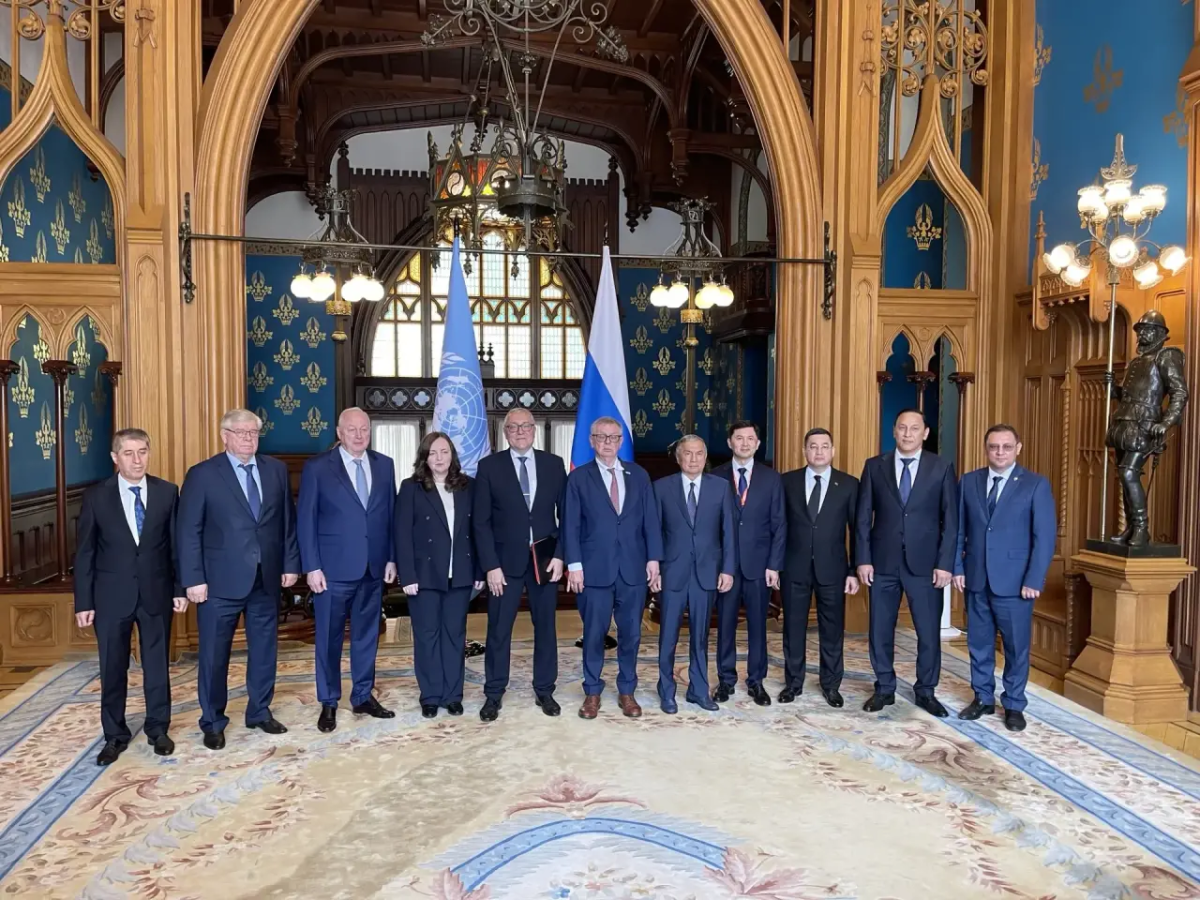
On July 15, 2026, the High-Level Regional Meeting “Enhancing Capacities to Prevent the Supply of Weapons to Terrorists in Central Asia” was held in Moscow. The event was organized by the United Nations Office of Counter-Terrorism with the participation of the Russian side.
The meeting was chaired by Acting UN Under-Secretary-General Alexander Zuev.
A welcoming address on behalf of Russian Foreign Minister Sergey Lavrov was delivered by Russian Deputy Foreign Minister Dmitry Lubinsky.
The event was attended by Acting CSTO Secretary General Valery Semerikov, Head of the CIS Anti-Terrorism Center Evgeny Sysoev, Deputy Director of the Executive Committee of the SCO Regional Anti-Terrorist Structure Artur Golovanov, as well as heads of counter-terrorism agencies of Kazakhstan, Kyrgyzstan, Tajikistan, Turkmenistan and Uzbekistan.
In his speech, Valery Semerikov spoke about the CSTO’s annual permanent operational and preventive operations — “Mercenary”, “Channel”, “Illegal” and “Proxy” — within which systematic efforts are carried out, alongside their main objectives, to seize weapons and explosives. Over the past five years, these operations resulted in the seizure of 8,374 firearms, more than 59,000 rounds of ammunition and 2,000 kilograms of explosives from illicit circulation, with 296 criminal cases initiated. In addition, 46 terrorist attacks were prevented, the activities of 307 terrorist groups were disrupted, and the total volume of seized narcotics exceeded 437 tonnes. Valery Semerikov emphasized that the effectiveness of the special operations has increased due to measures implemented within the Organization and closer cooperation with relevant structures of the CIS, SCO and UN.
Speaking about further steps, the Acting CSTO Secretary General noted that the CSTO Collective Security Council had approved the Counter-Terrorism and Anti-Drug Strategies for 2026–2030, as well as the Plan for improving the Organization’s Collective Forces. The Targeted Interstate Program on strengthening the Tajik-Afghan border is being implemented, which will help reduce tensions in the region.
“To enhance coordination of efforts to counter international terrorism and combat the illicit trafficking of weapons, we are committed to closer cooperation with the CIS, SCO and UN within the framework of existing agreements. In this context, on the sidelines of the International Security Forum held on June 28 in Moscow, we signed a Framework Document on cooperation with the African Union Counter-Terrorism Centre,” Valery Semerikov stated.
The participants of the meeting also discussed best practices for countering the use of small arms, improvised explosive devices and unmanned aerial vehicles for terrorist purposes.