In the Russian Federation, at the Chebarkulsky training range, particular attention is being paid to organizing the evacuation and repair of damaged equipment under the threat of enemy UAV attacks during the special exercise with the logistics forces and assets of the CSTO Troops (Collective Forces) “Echelon-2026”.
Today, at the Chebarkulsky training range in the Russian Federation, as part of the command-and-staff exercise with the CSTO Collective Operational Reaction Forces (CORF) “Interaction-2026”, joint actions to liberate a populated area captured by a simulated adversary were practiced.
On September 29–30, 2026, the 6th International Conference of the Ministry of Internal Affairs of the Russian Federation on the spread of extremist ideology was held in Moscow. The CSTO delegation, comprising Umar Umarzoda, Head of the Department for Countering Challenges and Threats, and Igor Demchenko, Adviser to the Department, took part in the conference.
In the Russian Federation, at the Chebarkulsky training range, reconnaissance groups have begun practicing practical actions in designated areas as part of the CSTO special exercise with reconnaissance forces and assets “Search-2026”.
A working meeting of the heads of the defense communication management bodies of the CSTO member states was held.
 27.07.2023
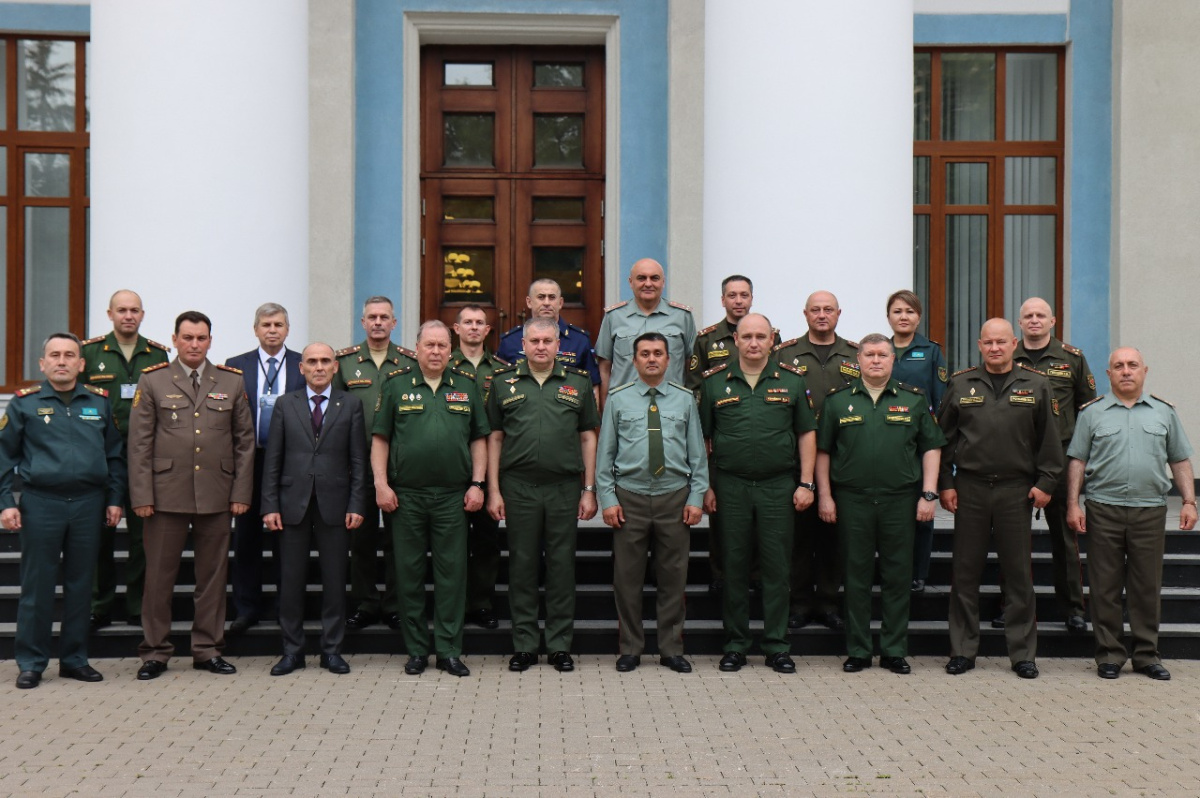
From 25 to 27 July, the CSTO Joint Staff hosted a working meeting of the heads of defense communication management bodies of the CSTO member states.
The event was attended by representatives of the defense authorities of the Republic of Armenia, the Republic of Belarus, the Republic of Kazakhstan, the Kyrgyz Republic, the Russian Federation, the Republic of Tajikistan, the CSTO Joint Staff and the CSTO Secretariat.
Addressing the participants of the working meeting, the Chief of the CSTO Joint Staff, Colonel General Anatoly Sidorov, noted that the most important area of development of the Collective Security Treaty Organization was the improvement of the system of interstate information cooperation and the management system of the CSTO Troops (Collective Forces), the technical basis of which was the communications system. He also noted that the experience of the peacekeeping operation in the Republic of Kazakhstan and the annual joint trainings demonstrated the need to coordinate the efforts of the CSTO member states to improve the CSTO communication system.
The CSTO Joint Staff, in cooperation with defense agencies, has developed draft Recommendations on the organization of communications in contingents of CSTO Troops (Collective Forces), which have been tested during joint operational and combat training activities. The document has now undergone internal national co-ordination and will be submitted for approval to the members of the Council of Defense Ministers and the Committee of Secretaries of the CSTO Security Council in November this year.
During the working session, Colonel Vitaly Kenyaykin, Head of the Department for Organisation of Communications and Automated Troop Control Systems at the CSTO Troops (Collective Forces) Planning and Training Centre, made a presentation on the following topic "Perspective image of the CSTO communication system, immediate and future tasks for its formation".
Particular attention was paid to the information provided by the representative of the Russian Federation on the experience of using radio and satellite communications in armed conflicts.
A representative of the Republic of Belarus presented a report on practical ways of implementing possible areas for the development of means of communication in the interests of the CSTO Troops (Collective Forces) proposed at the International Military and Scientific Conference in Minsk.
The representative of the Republic of Kazakhstan spoke about the experience of organizing communications and data transmission during the joint training "Interaction-2022" with the CSTO Collective Rapid Reaction Forces. In the course of the discussion of this issue, it was decided to plan the study of issues related to the organization of radio networks for cooperation in contingents of the CSTO Troops (Collective Forces) with the participation of radio reconnaissance and electronic warfare forces and means within the framework of the trainings conducted in the CSTO format.
Representatives of the defense agencies of the Republic of Armenia, the Kyrgyz Republic and the Republic of Tajikistan made presentations on improving the technical basis for intergovernmental information interaction.
The participants in the working session also heard a report by a representative of the Marshal of the Soviet Union S.M. Budyonny Military Academy of Communications on the possibility of developing unified standards, protocols and interfaces necessary for the development of advanced means of communication planned for use in contingents of the CSTO Troops (Collective Forces).