Servicemen of the Combined Arms Army of the Central Military District (CMD) have arrived in the Republic of Belarus to take part in the command-and-staff exercise with the CSTO Peacekeeping Forces “Indestructible Brotherhood-2026” and the special exercise with the CSTO joint NBC protection and medical support formation “Barrier-2026”.
On October 7, 2026, the Fourth Counter-Terrorism Forum opened in Minsk (Republic of Belarus), bringing together the CIS Conference on Countering Terrorism and Extremism, the SCO Regional Anti-Terrorist Structure international scientific and practical conference, and joint counter-terrorism exercises.
October 7 marks the 24th anniversary of the signing of the Charter of the Collective Security Treaty Organization, which formalized the establishment of the CSTO as an international regional organization. The goals set out in the document, including strengthening peace and stability and collectively protecting the independence, territorial integrity and sovereignty of the member states, remain the foundation for developing mutually beneficial, truly allied cooperation. On this basis, the Russian Federation is chairing the CSTO in 2026 under the motto “Collective security in a multipolar world: a common goal, shared responsibility.”
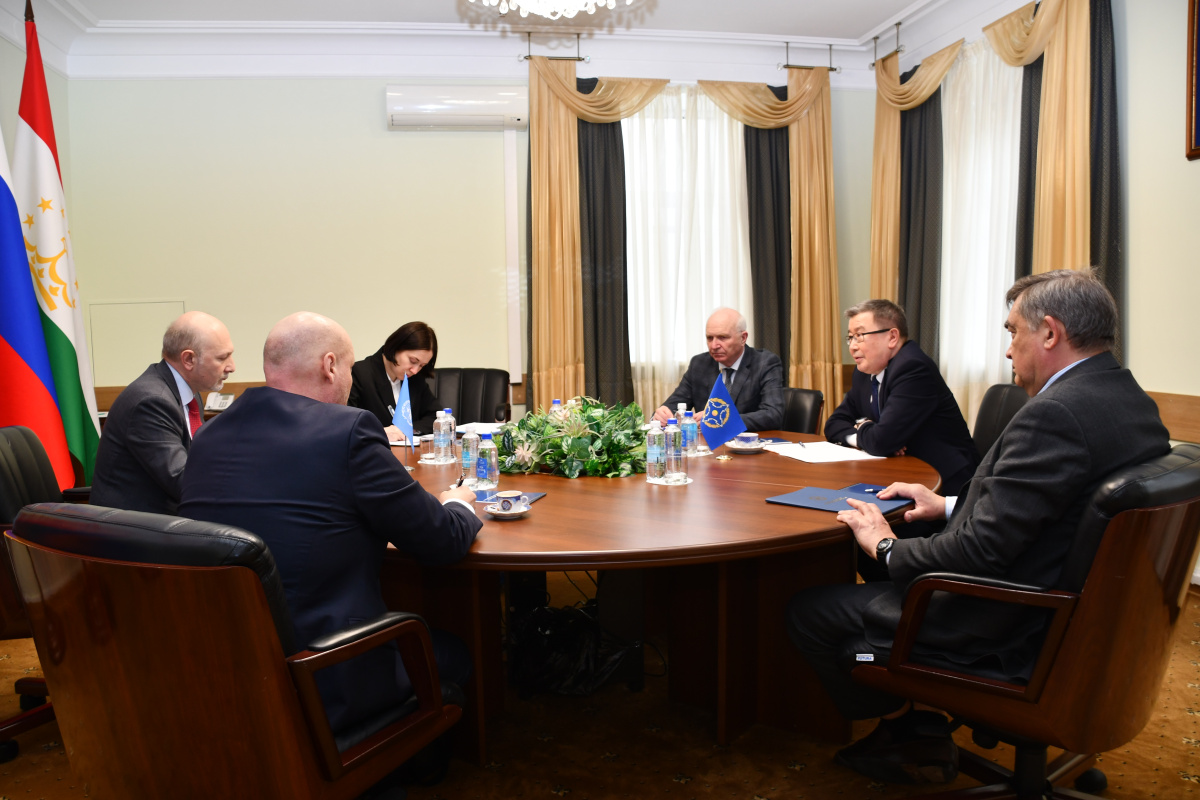
On the meeting between the CSTO Deputy Secretary General Samat Ordabaev and the UN Secretary-General's Special Representative for Central Asia Kakha Imnadze
 22.04.2024
On 22 April 2024, the CSTO Secretariat hosted a working meeting between the Deputy Secretary General of the Collective Security Treaty Organization, Samat Ordabaev, and the Special Representative of the UN Secretary General for Central Asia, Head of the UN Regional Centre for Preventive Diplomacy for Central Asia (UNRCCA), Kakha Imnadze.
The sides noted the dynamic development of contacts between the CSTO Secretariat and relevant UN structures, and exchanged assessments on a wide range of issues on the international agenda. Particular attention was paid to the situation in Central Asia. The importance of constant monitoring of the impact of the "Afghan factor" on peace and security in the region, as well as the importance of preventive action to counter risks and threats, including cooperation in the information and forecasting sphere, were emphasized.