At the Losvido training range in the Republic of Belarus, peacekeeping units repelled a simulated enemy attack on a humanitarian convoy during the command-and-staff exercise with the CSTO Peacekeeping Forces “Indestructible Brotherhood-2026”.
These days, the 23rd International Combat Sambo Tournament for the Cup of the Secretary General of the Collective Security Treaty Organization, featuring law enforcement personnel from CSTO member states, is being held at the Ognikovo Park Hotel (19 Ognikovo, Istra District, Moscow Region).
At the Losvido training range in the Republic of Belarus, peacekeeping units practiced tactical procedures at a stationary checkpoint as part of the process of coordinating units and practicing joint actions during the command-and-staff exercise with the CSTO Peacekeeping Forces “Indestructible Brotherhood-2026”.
Today, at the Starodorozhsky training range in the Republic of Belarus, servicemen of the CSTO joint NBC protection and medical support formation began practical operations as part of the “Barrier-2026” special exercise.
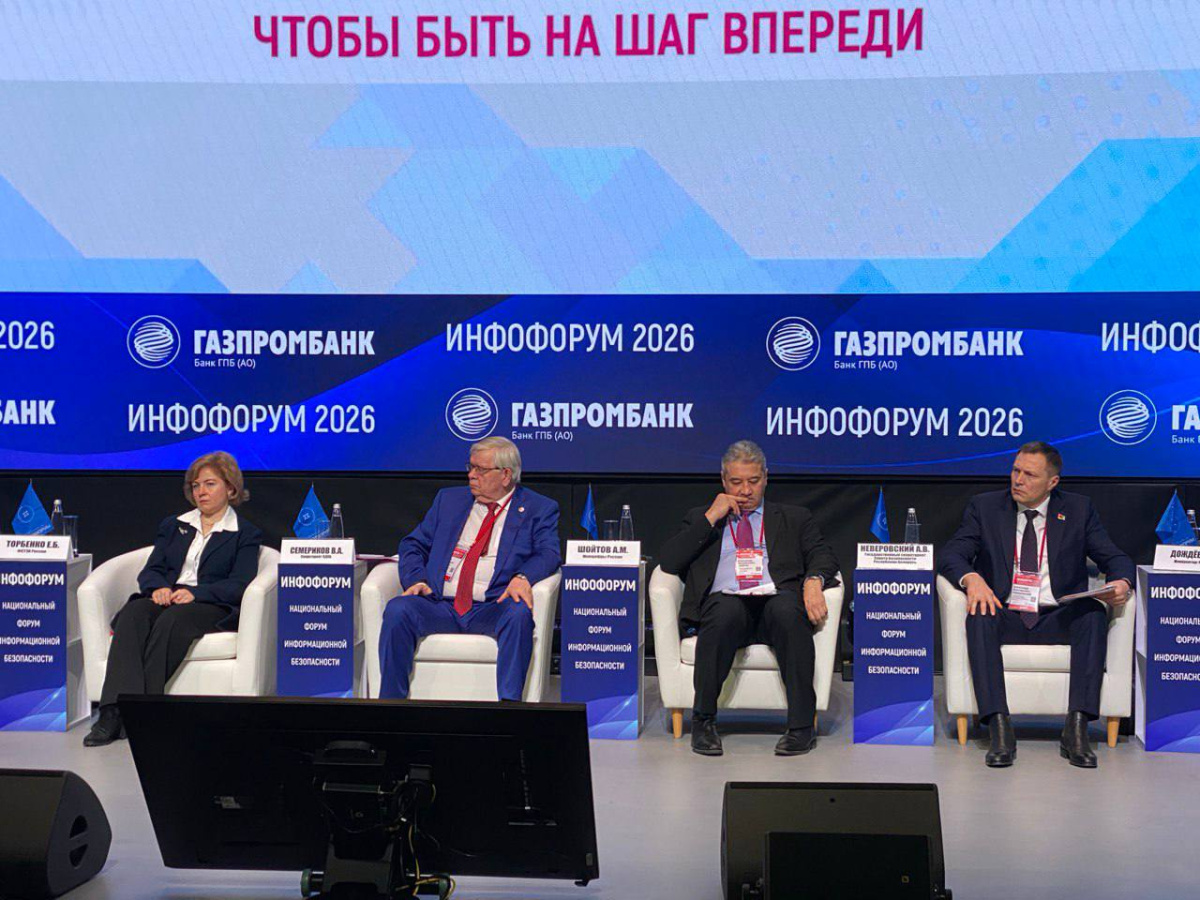
Statement by CSTO Deputy Secretary General Valery Semerikov at the INFOFORUM-2026 National Forum on Information Security
 28.01.2026
Dear Chair,
Dear colleagues, organizers, and guests of the 28th National Forum on Information Security,
I am pleased to welcome you to this important event, which serves as a unique platform for open dialogue, the exchange of best practices, and the development of proposals to support decision-making in the field of information security for the CSTO. In the year of the Russian Federation’s chairmanship of the Organization, the theme of our plenary session acquires particular relevance and significance.
In today’s environment, marked by rapid technological development and the growth of cyber threats, ensuring information security has become an integral component of national sovereignty and global stability. The CSTO accords priority attention to this area, actively developing collective protection mechanisms. In this regard, I will briefly outline the key results of our joint efforts with which the Organization has entered the current year.
First and foremost, the next-sixteenth-cycle of operational and preventive measures under Operation “PROXY” has been successfully completed. The operation is aimed at countering the dissemination of information that causes political damage to national and allied interests, including the promotion of terrorism, religious fundamentalism and extremism, crimes related to electronic fraud, illicit drug trafficking, money laundering, the spread of malware, pornographic content, illegal migration, trafficking in weapons and human beings, and other criminal activities.
This ongoing operation has proven its effectiveness in countering crime in the field of information technologies.
Interim results for 2025 attest to the scale of the negative impact on the information space of the CSTO member states. More than 400,000 destructive information resources were identified and blocked. Over 300,000 criminal cases were initiated, and more than 12,000 individuals were convicted in previously initiated cases.
An important step toward harmonizing our legal framework was the development and adoption of model laws “On Information Security,” “On the Security of Critical Information Infrastructure,” and “On Information Protection and Cybersecurity.” These documents help bring national legislative frameworks closer together.
To enhance coordination, a specialized Working Group was established in 2025 by decision of the CSTO Committee of Secretaries of Security Councils; its composition and regulations were approved. In addition, the first CSTO International Conference on Cybersecurity was held in Kyrgyzstan. The materials from this conference will enable us to formulate clear priorities for our further work and will be circulated to the CSTO member states in the near future.
I would also like to note the successful completion of the work of the UN Open-Ended Working Group on cybersecurity. One of its key practical outcomes was the establishment of a Global Directory of Points of Contact to facilitate interaction among national computer incident response teams. This platform, hosted on the website of the UN Office for Disarmament Affairs, clearly demonstrates our contribution to strengthening global trust.
The agenda of today’s Forum is exceptionally broad and relevant. It covers issues ranging from Russia’s new Information Security Doctrine and technological sovereignty to the role of artificial intelligence, quantum technologies, and domestic solutions in protecting against cyber threats. Equally important are topics such as countering hybrid threats, protecting digital social services, ensuring the security of critical infrastructure, and, of course, personnel training, which is the foundation for the sustainable development of the sector.
Taking this opportunity, I would like to express my gratitude to the leadership and faculty of the National Research Nuclear University MEPhI, which provides specialized professional retraining and advanced training in information security for specialists from CSTO member states who are directly involved in countering crimes in the field of information technologies, protecting critical information infrastructure, and combating drug trafficking using information and communication technologies.
I would like to emphasize that this work has been organized at the initiative of the Security Council, with the support of the Ministry of Science and Higher Education, and by the personal decision of the President of the Russian Federation.
I am confident that the discussions at the Forum will be productive, contributing not only to the exchange of knowledge but also to the development of unified approaches to countering common challenges.
I wish all Forum participants engaging ideas and constructive solutions.