Servicemen of the Combined Arms Army of the Central Military District (CMD) have arrived in the Republic of Belarus to take part in the command-and-staff exercise with the CSTO Peacekeeping Forces “Indestructible Brotherhood-2026” and the special exercise with the CSTO joint NBC protection and medical support formation “Barrier-2026”.
On October 7, 2026, the Fourth Counter-Terrorism Forum opened in Minsk (Republic of Belarus), bringing together the CIS Conference on Countering Terrorism and Extremism, the SCO Regional Anti-Terrorist Structure international scientific and practical conference, and joint counter-terrorism exercises.
October 7 marks the 24th anniversary of the signing of the Charter of the Collective Security Treaty Organization, which formalized the establishment of the CSTO as an international regional organization. The goals set out in the document, including strengthening peace and stability and collectively protecting the independence, territorial integrity and sovereignty of the member states, remain the foundation for developing mutually beneficial, truly allied cooperation. On this basis, the Russian Federation is chairing the CSTO in 2026 under the motto “Collective security in a multipolar world: a common goal, shared responsibility.”
Speech by Taalatbek Masadikov, the CSTO Deputy Secretary General, during the working session “Prospects for collective security in Eurasia: the CSTO area of responsibility as a space for dialogue”
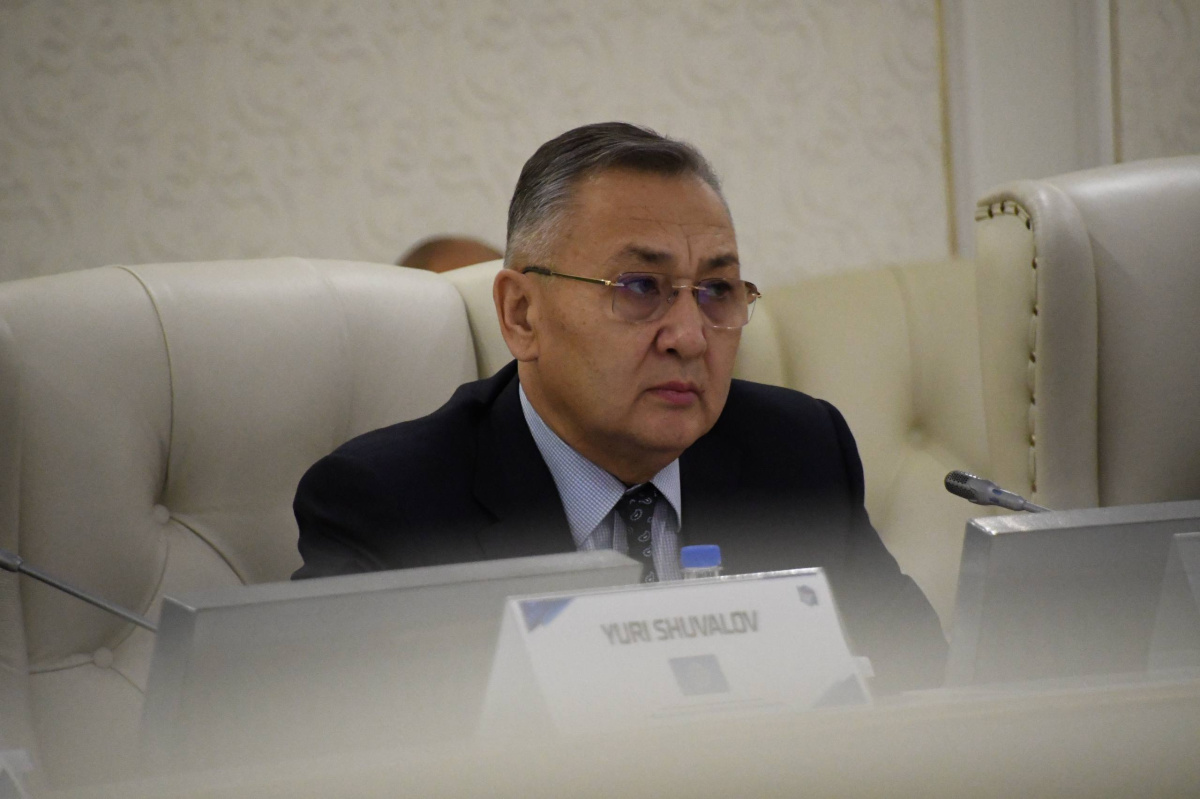 29.10.2025
Dear colleagues!
I welcome you to the working session on “Prospects for collective security in Eurasia: the CSTO area of responsibility as a space for dialogue.” I am very grateful to our Belarusian friends for their traditional hospitality and for creating a unique format for discussing a wide range of pressing Eurasian issues.
With the collapse of the international security system, which for decades ensured relative peace and dialogue on a global scale, geopolitical divisions are further exacerbated. As a result of the weakening of multilateral mechanisms for maintaining peace and stability, international affairs are increasingly focusing on the use of force as a means of resolving conflicts.
Large-scale conflicts, which could potentially escalate further, have come close to the borders of the CSTO's area of responsibility. Serious challenges and threats continue to emanate from Afghanistan, instability persists in the Middle East, and no solution has been found to the conflict in Eastern Europe. There are concerns about the prospects for the development of the situation in the Asia-Pacific region.
In pursuit of geopolitical dividends, Western countries are actively using increasingly sophisticated methods to combat and weaken their opponents—hybrid wars, which increasingly involve modern technologies, including artificial intelligence, which greatly facilitates the creation and dissemination of false, provocative messages and meanings.
Undoubtedly, the CSTO is aware of the scale and nature of the threats. The Organization has established and operates effective mechanisms for maintaining peace and stability, including a wide range of measures, some of which have been tested in real crisis situations. At the same time, it is important to bear in mind that modern security issues are extremely multifaceted, i.e., they depend on a large number of different circumstances, and the situation often develops very rapidly. In this regard, relying on reaction would be a dead end. It is necessary to concentrate joint efforts on preventing threats. For this reason, the ability to analyze the situation, predict various scenarios for its development, and propose realistic and effective solutions comes to the fore.
In this context, I would like to note that the separation of analytical and forecasting functions into an independent track took place in 2023 at the initiative of the Belarusian side, which included this item in the list of priorities of the Organization's chairmanship. Since then, we have done a lot of work to accomplish this task. In addition to mobilizing the Secretariat's resources, cooperation with expert communities in the member states and third countries is being systematically established. Based on the provisions of the Issyk-Kul Initiative, a CSTO network analytical structure is in place, in which representatives of the SCO countries also actively participate.
We are extremely interested in further developing our cooperation with experts from Greater Eurasia in the areas of analysis and forecasting, and would therefore be grateful for any new approaches, ideas, and assessments. I am convinced that the expanded format of our work will contribute to the formation of a more complete and objective view of the situation and create a basis for generating more informed decisions.
Overall, in terms of ensuring regional security, the leadership of leading Eurasian organizations fully recognizes the importance of coordinating efforts. In particular, in September 2025, the thirteenth meeting of senior administrative officials of the CSTO, the CIS, and the SCO was held, during which a roadmap for the development of cooperation between the three associations was signed.
This year, with your assistance, the CSTO Secretariat plans to publish its second report, which will provide a detailed and objective analysis of the progress and prospects of integration processes in Central Eurasia, which we understand to be the territory of the states that are members of regional associations – the CSTO, the EAEU, and the CIS. The purpose of this work is purely practical: to develop and present recommendations on the formation of new approaches to ensuring collective security and creating institutions for the joint development of our states. We see the forthcoming report as a comprehensive work covering not only military-political aspects, but also economic and socio-cultural aspects.
From this perspective, modern concepts aimed at strengthening security, unlocking the potential for cooperation, and harmonizing related processes deserve special attention. In the political sphere, this is the Eurasian Charter of diversity and multipolarity in the 21st Century, which was initially initiated by the Republic of Belarus and is gaining increasing support. Its concept is extremely consistent with today's political realities. We look forward to further expansion of the Charter's membership.
We attach great importance to the initiative to establish a new Eurasian security architecture based on the principles of equality and indivisibility, while ensuring that the states of the continent bear primary responsibility for resolving regional disputes and conflicts. There is broad consensus on this issue: it has been supported by Russian President Vladimir Putin, as well as the foreign ministers of the CSTO and the CIS.
In the economic sphere, we see significant prospects for Russia's “Great Eurasian Partnership” initiative, which envisages the comprehensive expansion of economic ties, the opening of new transport corridors, and the creation of favorable conditions for business and scientific cooperation between countries on this vast continent. In terms of meaning, this concept fits in well with other regional projects, including China's “One Belt, One Road” initiative, as well as other programs that can bring the peoples of the region closer together and ensure their stable development and prosperity. At the same time, we see an opportunity to leverage the potential of the CSTO to strengthen the security of “Greater Eurasia.”
In 2026, the chairmanship of the CSTO will pass to the Russian Federation, which undoubtedly plays a special role in strengthening and promoting the interests of the Organization. We are working closely with our Russian colleagues and look forward to new impetus and initiatives aimed at strengthening our collective potential.
Thank you for your attention, and I wish us all fruitful work.