On October 7, 2026, the Fourth Counter-Terrorism Forum opened in Minsk (Republic of Belarus), bringing together the CIS Conference on Countering Terrorism and Extremism, the SCO Regional Anti-Terrorist Structure international scientific and practical conference, and joint counter-terrorism exercises.
October 7 marks the 24th anniversary of the signing of the Charter of the Collective Security Treaty Organization, which formalized the establishment of the CSTO as an international regional organization. The goals set out in the document, including strengthening peace and stability and collectively protecting the independence, territorial integrity and sovereignty of the member states, remain the foundation for developing mutually beneficial, truly allied cooperation. On this basis, the Russian Federation is chairing the CSTO in 2026 under the motto “Collective security in a multipolar world: a common goal, shared responsibility.”
From October 18 to 23 this year, a special exercise codenamed “Cobalt-2026” will be held in the Republic of Tajikistan.
Today, the active phase of the command-and-staff exercise with the Collective Operational Reaction Forces (CORF) of the CSTO “Interaction-2026” and the special exercises “Search-2026” and “Echelon-2026” concluded in the Russian Federation.
CSTO Deputy Secretary General Valery Semerikov takes part in the 19th Meeting of Heads of Counter-Terrorism Units of the CIS Member States
 10.06.2026
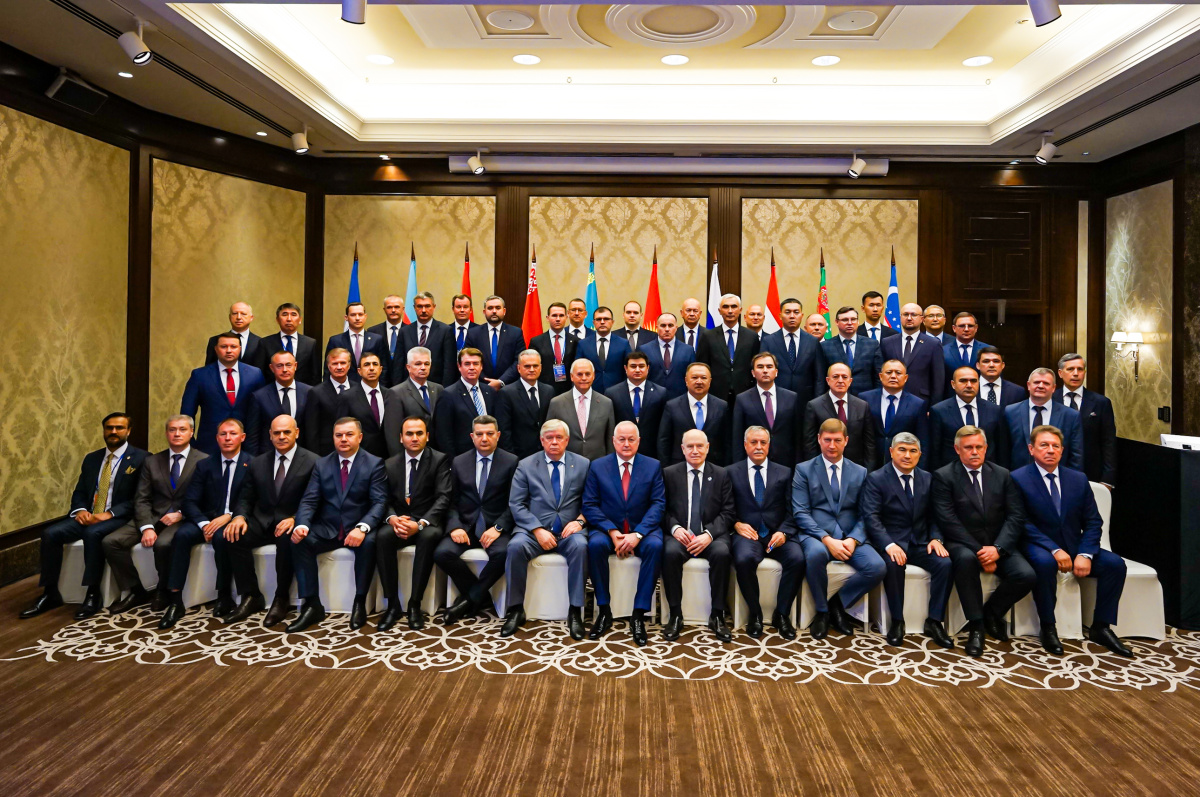
On June 9, 2026, a delegation of the Secretariat of the Collective Security Treaty Organization, headed by CSTO Deputy Secretary General Valery Semerikov, took part in the 19th Meeting of Heads of Lead Counter-Terrorism Units of the Competent Authorities of the CIS Member States and Heads of National Structures Responsible for Coordinating Counter-Terrorism and Counter-Extremism Activities. The event was organized by the Anti-Terrorism Center of the CIS Member States.
The participation of CSTO Secretariat representatives in the Meeting once again confirmed the special nature of the close cooperation and partnership that have developed between the CIS Anti-Terrorism Center and the CSTO Secretariat in combating terrorism and extremism across the post-Soviet space.
In his address to the plenary session, the CSTO Deputy Secretary General presented a comprehensive assessment of the current international security environment. Speaking about the specific threats within the CSTO area of responsibility, Valery Semerikov emphasized that, amid the erosion of fundamental deterrence mechanisms, terrorism and extremism are increasingly being used to advance political and economic interests and are becoming integrated into systems of hybrid warfare.
Providing a detailed overview of the situation in each of the CSTO collective security regions, Valery Semerikov noted:
“The situation along the CSTO’s western borders remains particularly tense. The main threat comes from the countries of the so-called ‘civilized’ Europe, which have succumbed to revanchist and militaristic fervor. Military expenditures continue to rise steadily. Calls to attack the Kaliningrad Region and impose transport and economic blockades on Kaliningrad and Transnistria pose serious risks and consequences. The level of conflict potential in the Caucasus region also remains high. I believe that the growing influence of the EU, the United States, and Türkiye in the region may create an even greater source of tension. Afghanistan remains the key factor influencing the situation in Central Asia, serving as a source of threats such as terrorism, drug trafficking, illegal migration, and the spread of radical ideas throughout the region. I am confident that the implementation of the Targeted Interstate Program to Strengthen the Tajik-Afghan State Border, adopted by our heads of state in 2024, will significantly reduce tensions and contribute to stabilizing the situation in the region.”
The head of the CSTO delegation also informed participants in detail about decisions that have been adopted and are planned within the Organization. These include the adoption of the Anti-Drug Strategy and its accompanying implementation measures, the Anti-Terrorism Strategy for 2026–2030, a new Plan for the Development of Military Cooperation providing for the development of the Collective Aviation Forces and the creation of an air defense system taking into account the experience of the special military operation, as well as initiatives in the fields of biological security and countering illegal migration. Particular emphasis was placed on the new Regulations on CSTO Response to Crisis Situations, approved by the Collective Security Council, which significantly reduce decision-making timelines, including those related to the deployment of the Collective Forces.
“We are firmly convinced that regardless of how effective a national security system may be, its effectiveness increases significantly when complemented by the capabilities of regional security systems and other international security mechanisms,” Valery Semerikov stressed.
During the Meeting, which was organized in the format of a plenary session and three specialized sessions, participants exchanged assessments of the situation in the field of countering terrorism and extremism, discussed issues of international cooperation, deradicalization, the application of artificial intelligence technologies, and scientific and educational support for counter-terrorism activities.
At the conclusion of the Meeting, a Final Document was adopted in which the participants reaffirmed their strong commitment to strengthening and expanding practical cooperation in countering terrorism and extremism, emphasized the importance of integrating operational, preventive, legislative, and scientific-educational components of cooperation, and confirmed their interest in further consolidating the efforts of the CIS, the SCO, and the CSTO to strengthen security throughout Eurasia, including through the implementation of the Roadmap for the Development of Cooperation among the three organizations signed by their Secretaries General in September 2025.