An international scientific and practical conference entitled “The Situation in the Middle East, North Africa and the Sahara-Sahel Region: Development Forecasts for 2027” was held in Moscow, organized by the Center for Scientific and Analytical Information of the Institute of Oriental Studies of the Russian Academy of Sciences.
On October 18, 2026, the “Cobalt-2026” special exercise opened in the Republic of Tajikistan, in accordance with the 2026 Plan for the Joint Training of Command and Control Bodies and Formations of Forces and Assets of the CSTO Collective Security System. The exercise involves special units of internal affairs and national security agencies, internal troops (National Guard), special services and anti-drug agencies, as well as rescue units incorporated into the Special Purpose Forces formations of the CSTO Collective Operational Reaction Forces (CORF).
From October 13 to 16, 2025, the 23rd International Combat Sambo Tournament for the Cup of the Secretary General of the Collective Security Treaty Organization, featuring law enforcement personnel from CSTO member states, was held at the Ognikovo Park Hotel (19 Ognikovo, Istra District, Moscow Region).
Today, the final stages of the command-and-staff exercise with the CSTO Peacekeeping Forces “Indestructible Brotherhood-2026” and the special exercise with the CSTO joint NBC protection and medical support formation “Barrier-2026” took place at the Losvido and Starodorozhsky training ranges in the Republic of Belarus.
On October 15–16, a CSTO, CIS and SCO conference on security issues in Central Asia and Afghanistan was held in Moscow as part of Russia’s CSTO chairmanship programme.
Video message from Valery Semerikov, the CSTO Deputy Secretary General, to participants in a thematic event organized by Russia “on the margins” of the 69th session of the UN Commission on Narcotic Drugs
 11.03.2026
During its year as chair of CSTO, under the motto “Collective Security in a Multipolar World: A Common Goal, Shared Responsibility,” the Russian Federation is placing particular emphasis on the comprehensive development of regional cooperation in the fight against drug-related crime.
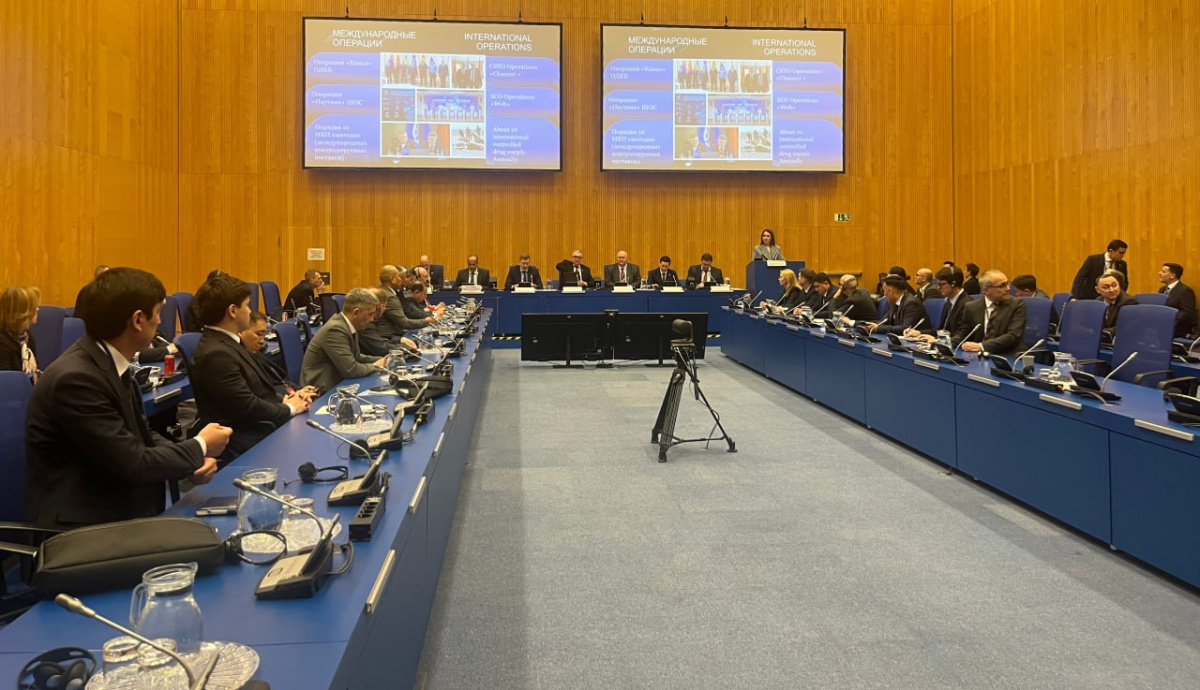
On March 9, “on the margins” of the 69th session of the UN Commission on Narcotic Drugs, Russia held a thematic event entitled “Regional Efforts to Combat Drug Crime: Best Practices of the CSTO, the SCO, and the CIS,” organized in cooperation with the Russian Ministry of Internal Affairs.
Text of the video message from Valery Semerikov, the CSTO Deputy Secretary General, to participants in the thematic event organized by Russia “on the margins” of the 69th session of the UN Commission on Narcotic Drugs:
Ladies and gentlemen!
The drug situation in the area of responsibility of the Collective Security Treaty Organization is characterized by the persistence of a fairly high level of illicit drug trafficking, which poses a threat to the national security of the Organization's member states and to the health and well-being of their populations.
Currently, the following main trends in drug trafficking are observed:
- an increase in the share of synthetic drugs in the overall structure of drug trafficking;
- the high addictiveness of newly synthesized drugs;
- the widespread use of modern information and communication technologies and the latest electronic payment instruments by drug traffickers;
- changes in global drug smuggling routes;
- use of unmanned aerial vehicles by drug traffickers.
In this regard, joint coordinated efforts to counter this threat are key to protecting society from the destructive influence of cross-border drug trafficking.
Our Organization prioritizes the implementation of practical collective measures aimed at achieving specific results.
Evidence of this approach in our activities is the international anti-drug operation “Channel,” which has been conducted by the Organization since 2003.
As a result of the joint efforts of all interested ministries and agencies of the CSTO member states, as well as observers, more than 447 tons of drugs were seized from illegal circulation during the operations. A total of 7,413 criminal groups involved in the production and distribution of controlled substances were exposed and brought to justice.
The main coordinator and organizer of joint anti-drug efforts in the CSTO area of responsibility is the Council of Heads of Competent Authorities for Countering the Drug Trafficking.
The tasks of treating drug addicts and preventing the non-medical use of psychoactive substances are addressed in close cooperation between the member states of the Organization within the framework of the Coordination Meeting of Chief Narcologists of our states.
Joint training for anti-drug units of the CSTO member states is organized at basic law enforcement training institutions.
In order to combat money laundering and terrorist financing, close cooperation has been established between the CSTO Secretariat and the relevant Eurasian group, which has significantly increased the effectiveness of measures taken to undermine the economic foundations of the criminal drug industry.
At the same time, close cooperation has been established with specialized units of international structures such as the UNODC, the International Narcotics Control Board, the Commission on Narcotic Drugs, the SCO, and the CIS on issues related to combating drug trafficking.
The Collective Security Treaty Organization intends to further expand practical partnership in the field of drug control at all levels, as well as to promote the latest scientific and practical achievements in the fight against drugs. These tasks will be implemented in accordance with the CSTO Anti-Drug Strategy for 2026-2030, which was approved by the heads of our states in November 2025.
Thank you for your attention!