At the Losvido training range in the Republic of Belarus, peacekeeping units repelled a simulated enemy attack on a humanitarian convoy during the command-and-staff exercise with the CSTO Peacekeeping Forces “Indestructible Brotherhood-2026”.
These days, the 23rd International Combat Sambo Tournament for the Cup of the Secretary General of the Collective Security Treaty Organization, featuring law enforcement personnel from CSTO member states, is being held at the Ognikovo Park Hotel (19 Ognikovo, Istra District, Moscow Region).
At the Losvido training range in the Republic of Belarus, peacekeeping units practiced tactical procedures at a stationary checkpoint as part of the process of coordinating units and practicing joint actions during the command-and-staff exercise with the CSTO Peacekeeping Forces “Indestructible Brotherhood-2026”.
Today, at the Starodorozhsky training range in the Republic of Belarus, servicemen of the CSTO joint NBC protection and medical support formation began practical operations as part of the “Barrier-2026” special exercise.
Issues of improving crisis response and expert cooperation discussed in the CSTO
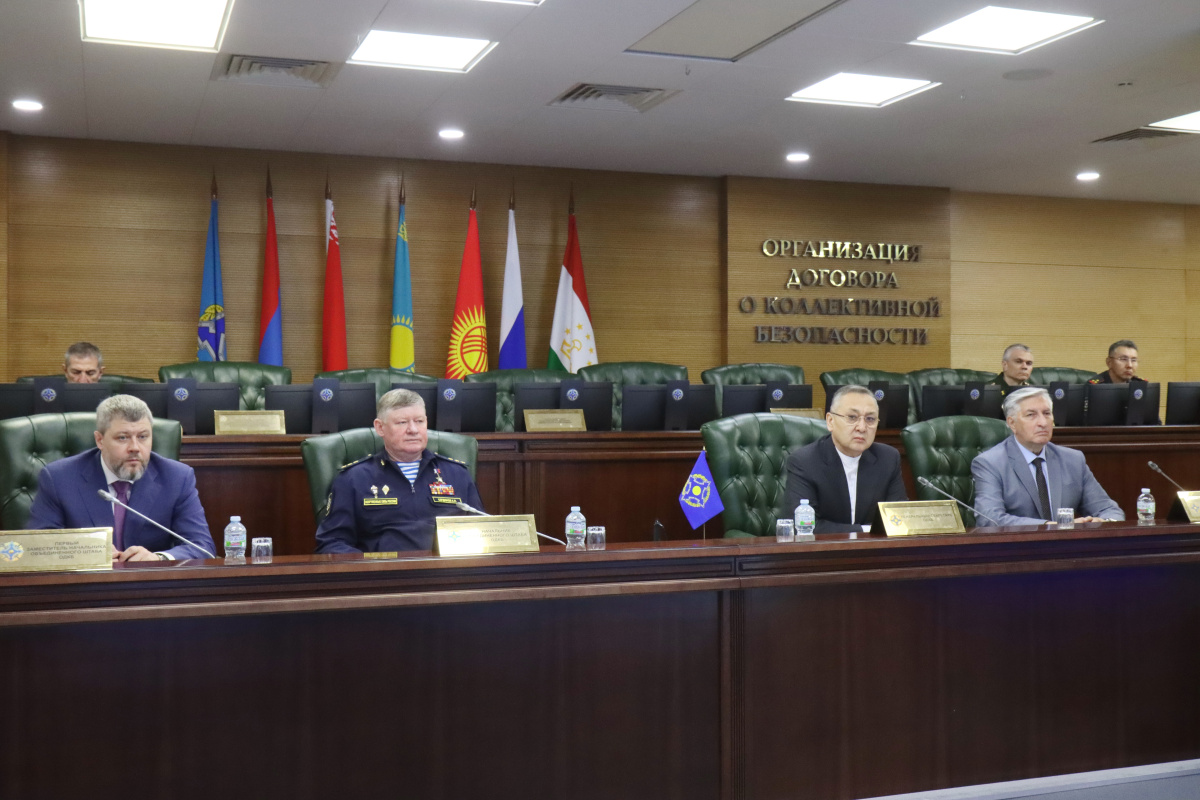 08.05.2026
On May 7, the CSTO Secretary General Talatbek Masadykov held a working meeting in Moscow at the CSTO Joint Staff aimed at improving issues related to crisis response and expert cooperation.
During the event, Chief of the CSTO Joint Staff Colonel General Andrey Serdyukov briefed the head of the Organization on the proposed areas for further improvement of the crisis response system.
The participants discussed in detail issues related to the interaction of the Crisis Response Center with the structures of international organizations, the operating algorithm of functional groups, as well as the mechanism for preparing proposals for CSTO bodies with a view to adopting decisions aimed at preventing and resolving crisis situations.
Special attention was paid to the unique capabilities of the expert-analytical platform designed to coordinate and strengthen collective security, which makes it possible to model and forecast scenarios for the development of situations, assess risks, and formulate recommendations for risk mitigation.