From October 13 to 16, 2025, the 23rd International Combat Sambo Tournament for the Cup of the Secretary General of the Collective Security Treaty Organization, featuring law enforcement personnel from CSTO member states, was held at the Ognikovo Park Hotel (19 Ognikovo, Istra District, Moscow Region).
Today, the final stages of the command-and-staff exercise with the CSTO Peacekeeping Forces “Indestructible Brotherhood-2026” and the special exercise with the CSTO joint NBC protection and medical support formation “Barrier-2026” took place at the Losvido and Starodorozhsky training ranges in the Republic of Belarus.
On October 15–16, a CSTO, CIS and SCO conference on security issues in Central Asia and Afghanistan was held in Moscow as part of Russia’s CSTO chairmanship programme.
At the Losvido training range in the Republic of Belarus, peacekeeping units repelled a simulated enemy attack on a humanitarian convoy during the command-and-staff exercise with the CSTO Peacekeeping Forces “Indestructible Brotherhood-2026”.
These days, the 23rd International Combat Sambo Tournament for the Cup of the Secretary General of the Collective Security Treaty Organization, featuring law enforcement personnel from CSTO member states, is being held at the Ognikovo Park Hotel (19 Ognikovo, Istra District, Moscow Region).
International subregional anti-drug operation “Kanal-Zapadnaya Dvina” was conducted
 29.09.2025
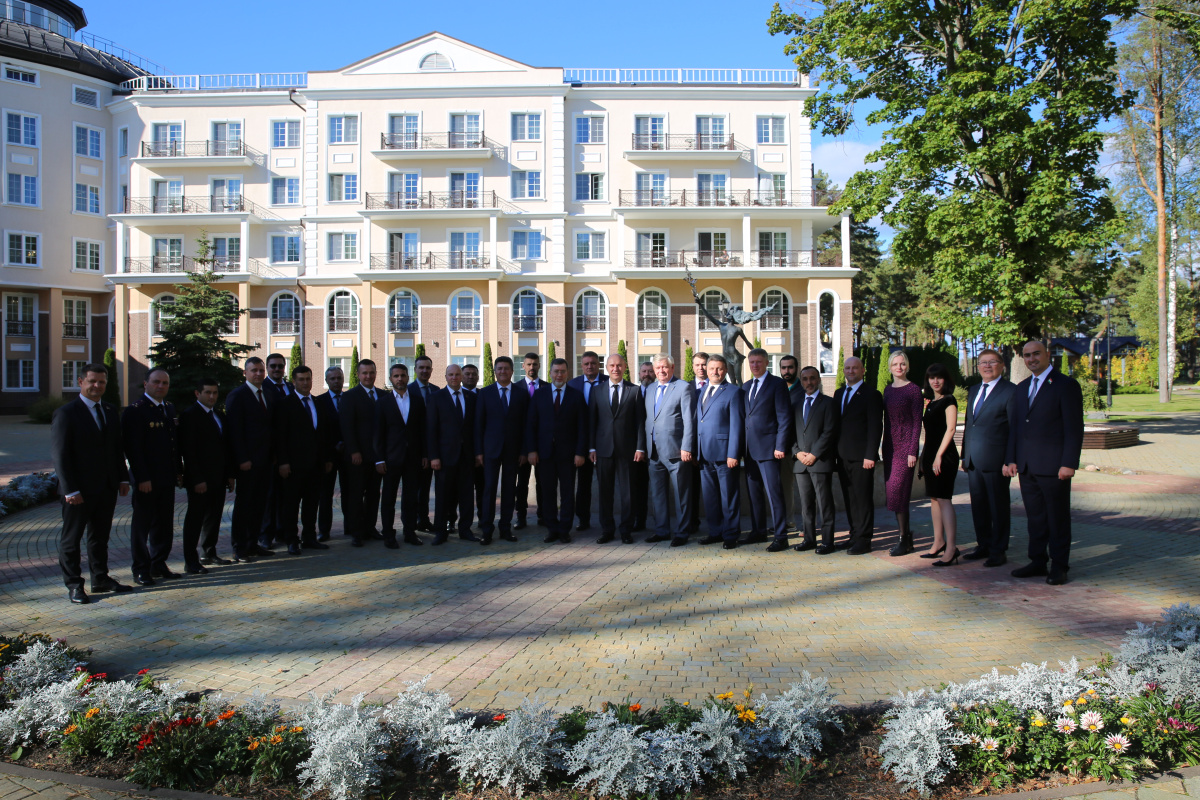
In accordance with the CCBCD Plan of Major Activities for 2025, from September 22 to 26, 2025, an international subregional operation was conducted on the territory of the CSTO member states with the aim of disrupting the channels for the supply of drugs, their precursors and analogues, new psychoactive and potent substances to the CSTO's area of responsibility, neutralize international transnational drug trafficking groups, and eliminate underground drug production and undermine the economic foundations of the drug trade, an international subregional anti-drug operation called “Channel-Western Dvina” was conducted.
Law enforcement agencies, border and customs authorities, state security services, financial intelligence units of CSTO member states, as well as observers from China, Iran, the UAE, the UN Office on Drugs and Crime, the EAG, and the CIS Committee of Heads of Law Enforcement Agencies of the Council of Heads of Customs Services participated in the operation.
The international coordination headquarters for managing the operation was set up at the “Plissa” Health Resort Complex (Vitebsk Region, Republic of Belarus).
Approximately 23,000 employees of the competent authorities of the participating states were involved in the operation.
As a result of coordinated actions during the operation, according to preliminary information from authorized national authorities, approximately 5.7 tons of narcotic drugs and psychotropic substances were seized from illegal circulation in the territories of the states participating in the operation (more than 894 kg in CSTO member states), including over 3.1 kg of mephedrone, about 3.5 kg of α-PVP, about 2 tons of marijuana, 267 kg of hashish, 110 kg of heroin, and over 265 kg of precursors.
Twenty-one firearms and approximately 8,961 rounds of ammunition of various calibers were seized. Five hundred twenty-four drug-related crimes were detected, including 94 committed by groups and 12 related to smuggling. Two drug laboratories were shut down. A total of 310 individuals were detained for crimes related to illegal drug trafficking, including 99 who were wanted by the authorities. A total of 460 websites were identified that were used to disseminate prohibited information related to drugs.
During the operation, financial intelligence and drug control units of the CSTO member states coordinated their efforts, resulting in the monitoring of over 1,000 suspicious financial transactions involving more than 260 individuals suspected of being involved in drug trafficking. The total amount of transactions identified exceeds 400 million rubles, most of which are related to the transit of funds, cash deposits and withdrawals, the use of “drop” bank cards, and cryptocurrency transactions.
Financial intelligence agencies have decided to suspend cryptocurrency and banking operations of 65 individuals reasonably suspected of illegal transactions involving controlled chemical compounds.
Observers from Iran and China informed members of the International Coordination Headquarters about seizures of large consignments of narcotic drugs on their territory during the operation, conducted within the framework of the CSTO.
On September 26, 2025, preliminary results of the operation were summarized with the participation of the Chairman of the CSTO CCBCD, Deputy Minister of Internal Affairs of the Russian Federation A.I. Khrapov, Deputy Minister of Internal Affairs of the Republic of Belarus G.A. Kazakevich, First Deputy Director of Rosfinmonitoring O.V. Krylov, and Deputy Secretary General of the CSTO V.A. Semerikov.