At the Losvido training range in the Republic of Belarus, peacekeeping units repelled a simulated enemy attack on a humanitarian convoy during the command-and-staff exercise with the CSTO Peacekeeping Forces “Indestructible Brotherhood-2026”.
These days, the 23rd International Combat Sambo Tournament for the Cup of the Secretary General of the Collective Security Treaty Organization, featuring law enforcement personnel from CSTO member states, is being held at the Ognikovo Park Hotel (19 Ognikovo, Istra District, Moscow Region).
At the Losvido training range in the Republic of Belarus, peacekeeping units practiced tactical procedures at a stationary checkpoint as part of the process of coordinating units and practicing joint actions during the command-and-staff exercise with the CSTO Peacekeeping Forces “Indestructible Brotherhood-2026”.
Today, at the Starodorozhsky training range in the Republic of Belarus, servicemen of the CSTO joint NBC protection and medical support formation began practical operations as part of the “Barrier-2026” special exercise.
CSTO Secretariat delegation took part in INFOFORUM-2026
 29.01.2026
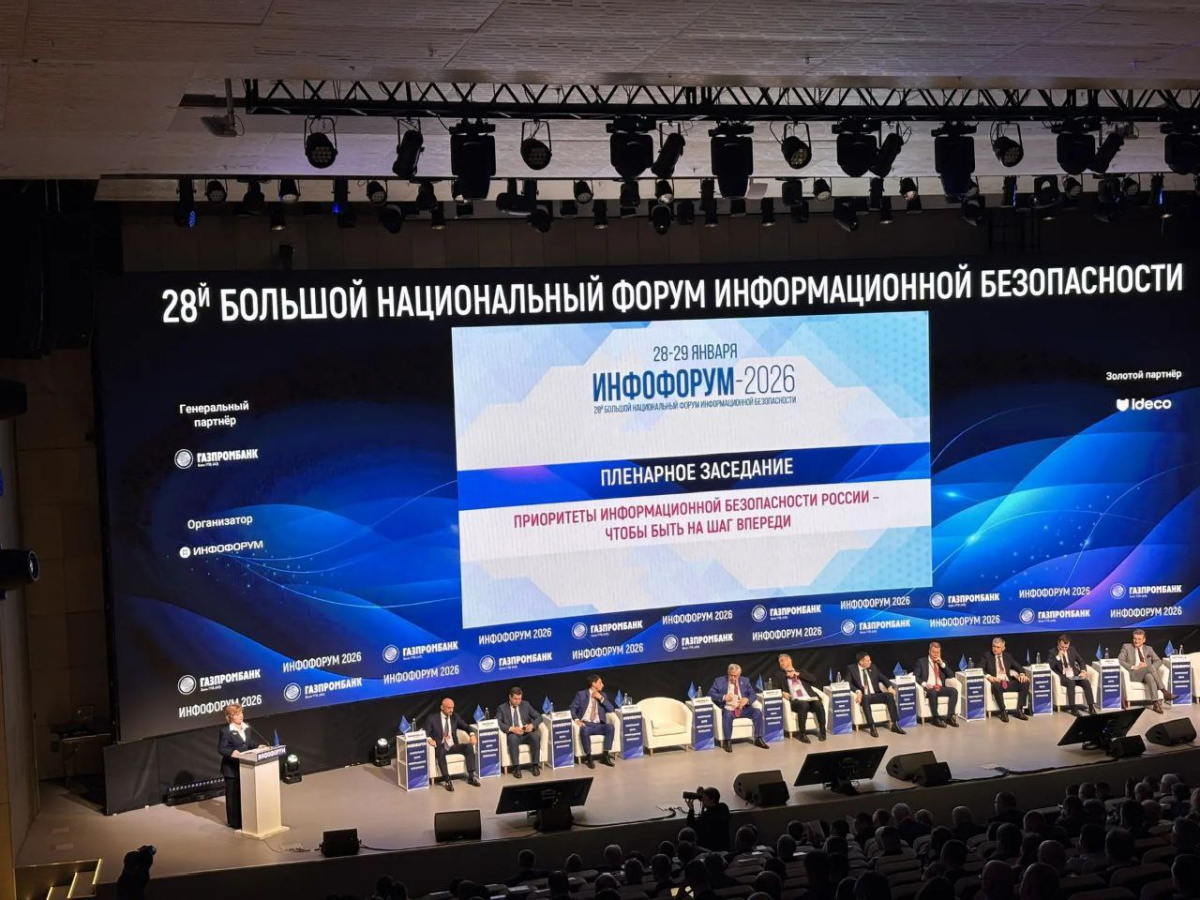
A delegation of the Collective Security Treaty Organization Secretariat, headed by CSTO Deputy Secretary General Valery Semerikov, took part in the 28th National Forum on Information Security “INFOFORUM-2026,” held on January 28–29 at the Lomonosov Innovation Cluster in Moscow.
The forum featured 12 thematic sessions, more than 150 presentations, an award ceremony for the professional “Silver Dagger” prize, and the exhibition “Cybersecurity Today.” Key topics of discussion included Russia’s updated Information Security Doctrine, issues of technological sovereignty, the role of artificial intelligence and quantum technologies, the protection of critical information infrastructure, countering hybrid threats, and personnel training.
More than 2,000 specialists from all regions of Russia participated in the forum. Participants included representatives of the State Duma, the Security Council Staff, the Ministry of Digital Development, Communications and Mass Media, FSTEC of Russia, the Bank of Russia, the Ministry of Industry and Trade, the Ministry of Foreign Affairs of Russia, as well as regional authorities.