October 7 marks the 24th anniversary of the signing of the Charter of the Collective Security Treaty Organization, which formalized the establishment of the CSTO as an international regional organization. The goals set out in the document, including strengthening peace and stability and collectively protecting the independence, territorial integrity and sovereignty of the member states, remain the foundation for developing mutually beneficial, truly allied cooperation. On this basis, the Russian Federation is chairing the CSTO in 2026 under the motto “Collective security in a multipolar world: a common goal, shared responsibility.”
From October 18 to 23 this year, a special exercise codenamed “Cobalt-2026” will be held in the Republic of Tajikistan.
Today, the active phase of the command-and-staff exercise with the Collective Operational Reaction Forces (CORF) of the CSTO “Interaction-2026” and the special exercises “Search-2026” and “Echelon-2026” concluded in the Russian Federation.
In the Russian Federation, at the Chebarkulsky training range, particular attention is being paid to organizing the evacuation and repair of damaged equipment under the threat of enemy UAV attacks during the special exercise with the logistics forces and assets of the CSTO Troops (Collective Forces) “Echelon-2026”.
23rd anniversary of the establishment of the CSTO Joint Staff
 28.04.2026
28 April marks the Day of the CSTO Joint Staff. It should be recalled that on 28 April 2003, in Dushanbe, the Collective Security Council, guided by the need to establish a military staff body responsible for implementing the military component of the Collective Security Treaty, adopted the Decision “On the Establishment of the Joint Staff of the Collective Security Treaty Organization.”
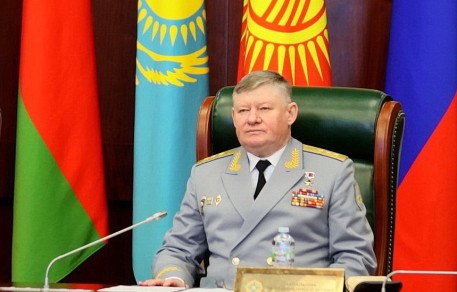
Today, the CSTO Joint Staff, headed by Colonel General Andrey Serdyukov, has been entrusted by the heads of state with tasks related to coalition military development, joint operational and combat training of the components of the CSTO Troops (Collective Forces), military-technical cooperation, coordination of joint training of personnel and specialists for the armed forces of the member states, as well as the organization of the functioning of the CSTO Crisis Response Center.
Congratulating the multinational team, the Chief of the CSTO Joint Staff noted, in particular: “In 2026, the Joint Staff, together with defense ministries, is carrying out active work to implement the Action Plan for the execution of decisions adopted at the November 2025 session of the Collective Security Council and the priority areas of the CSTO’s activities during the Russian Federation’s chairmanship, focusing its main efforts on the development of the military component of the Organization and ensuring the readiness of the Collective Forces to perform their assigned tasks.”
Within the framework of coalition military development, the Joint Staff, together with relevant ministries and agencies of the member states, pays considerable attention to the development of all components of the CSTO Troops (Collective Forces). With the organizational and coordinating role of the Joint Staff, further development is being carried out of the Collective Rapid Reaction Forces, the Collective Rapid Deployment Forces of the Central Asian region, the CSTO Peacekeeping Forces, the Collective Aviation Forces, and the joint CBRN protection and medical support formation of the CSTO.
Over more than two decades, with the direct participation of officers of the Joint Staff, the necessary regulatory and legal framework governing the Organization’s activities has been developed and is continuously being improved. To date, 64 international treaties have been concluded on key issues of interstate cooperation in the field of collective security, and about 2,000 documents have been signed at the level of heads of state, secretaries of security councils, as well as heads of key ministries — defense and foreign affairs — of the member states.
In the current conditions of growing challenges and threats to collective security, the Joint Staff, as a key element of the CSTO collective security system, continues its work to ensure the Organization’s readiness to adequately and effectively respond to possible crisis situations, to address tasks related to the development of the CSTO Troops (Collective Forces), and to ensure the sovereignty and territorial integrity of the member states.