On October 7, 2026, the Fourth Counter-Terrorism Forum opened in Minsk (Republic of Belarus), bringing together the CIS Conference on Countering Terrorism and Extremism, the SCO Regional Anti-Terrorist Structure international scientific and practical conference, and joint counter-terrorism exercises.
October 7 marks the 24th anniversary of the signing of the Charter of the Collective Security Treaty Organization, which formalized the establishment of the CSTO as an international regional organization. The goals set out in the document, including strengthening peace and stability and collectively protecting the independence, territorial integrity and sovereignty of the member states, remain the foundation for developing mutually beneficial, truly allied cooperation. On this basis, the Russian Federation is chairing the CSTO in 2026 under the motto “Collective security in a multipolar world: a common goal, shared responsibility.”
From October 18 to 23 this year, a special exercise codenamed “Cobalt-2026” will be held in the Republic of Tajikistan.
Today, the active phase of the command-and-staff exercise with the Collective Operational Reaction Forces (CORF) of the CSTO “Interaction-2026” and the special exercises “Search-2026” and “Echelon-2026” concluded in the Russian Federation.
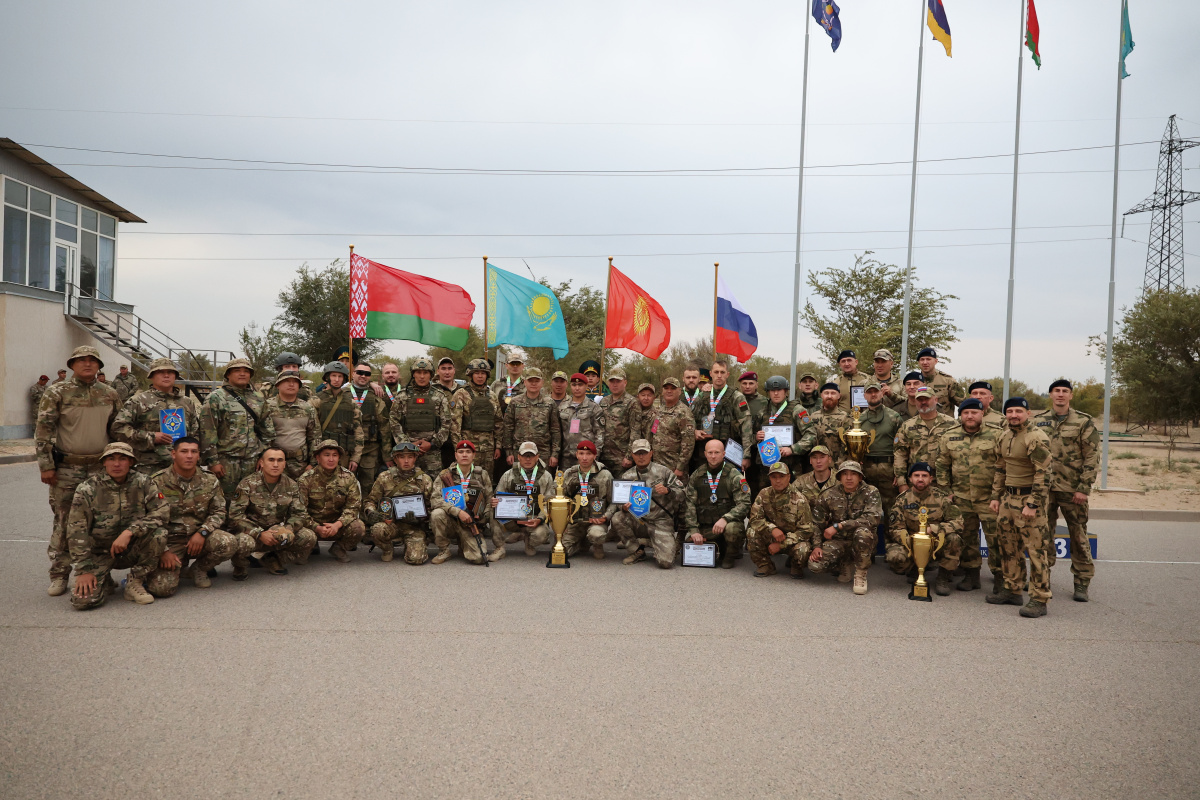
A special training of the CSTO Collective Rapid Reaction Forces, codenamed "Cobalt-2025," was held in Kazakhstan
 06.10.2025
From September 29 to October 3 of this year, at the training ground of the National Guard of the Republic of Kazakhstan, in accordance with the Plan for joint training of command and control bodies and the formation of forces and means of the CSTO collective security system for 2025, a special training was held with special units of the internal affairs agencies, national security, internal troops (National Guard), special and anti-drug services, as well as emergency rescue and firefighting structures that are part of the special forces formations of the CSTO Collective Rapid Response Forces under the code name "Cobalt-2025".
Special forces from CSTO member states honed their skills in combat-like conditions while conducting an independent special operation. An operational headquarters composed of representatives from CSTO member states practiced planning, decision-making, and unit command and control. A field command post was established to lead the special operation.
As part of the training, combined special operations task groups practiced practical actions in carrying out their assigned missions, and tactical shooting competitions with live firearms were also held.
The training involved armored vehicles, special-purpose motor vehicles, unmanned aerial vehicles, and combat aviation.
Observers from the SCO RATS Executive Committee and the CIS ATC attended the exercise. Overall leadership was provided by the Commander-in-Chief of the National Guard, Deputy Minister of Internal Affairs of the Republic of Kazakhstan, Major General A. S. Baltabekov.
Upon completion of the exercise, during the final briefing, CSTO Deputy Secretary General V. Semerikov noted the high quality of the training’s organization by the Kazakh side, the coherence, efficiency, and effectiveness of the Training Operational Headquarters, as well as the high level of operational, combat, and special training of the participating personnel.
In general, the goals of the training were achieved and the objectives fulfilled, the CSTO Deputy Secretary General stated.
The successful conduct of the training was facilitated by a training and methodological session held the day before with the leadership of relevant ministries and agencies of the CSTO member states, as well as commanders of units forming part of the CSTO CRRF’s Collective Special Forces, organized by the CSTO Secretariat jointly with representatives of the National Guard of Kazakhstan.
At the end of the training, the most distinguished personnel and servicemen were commended.