Servicemen of the Combined Arms Army of the Central Military District (CMD) have arrived in the Republic of Belarus to take part in the command-and-staff exercise with the CSTO Peacekeeping Forces “Indestructible Brotherhood-2026” and the special exercise with the CSTO joint NBC protection and medical support formation “Barrier-2026”.
On October 7, 2026, the Fourth Counter-Terrorism Forum opened in Minsk (Republic of Belarus), bringing together the CIS Conference on Countering Terrorism and Extremism, the SCO Regional Anti-Terrorist Structure international scientific and practical conference, and joint counter-terrorism exercises.
October 7 marks the 24th anniversary of the signing of the Charter of the Collective Security Treaty Organization, which formalized the establishment of the CSTO as an international regional organization. The goals set out in the document, including strengthening peace and stability and collectively protecting the independence, territorial integrity and sovereignty of the member states, remain the foundation for developing mutually beneficial, truly allied cooperation. On this basis, the Russian Federation is chairing the CSTO in 2026 under the motto “Collective security in a multipolar world: a common goal, shared responsibility.”
17th Meeting of the Coordinating Council on Emergency Situations of the CSTO Member States and interagency practical exercises held in Saint Petersburg
 01.07.2026
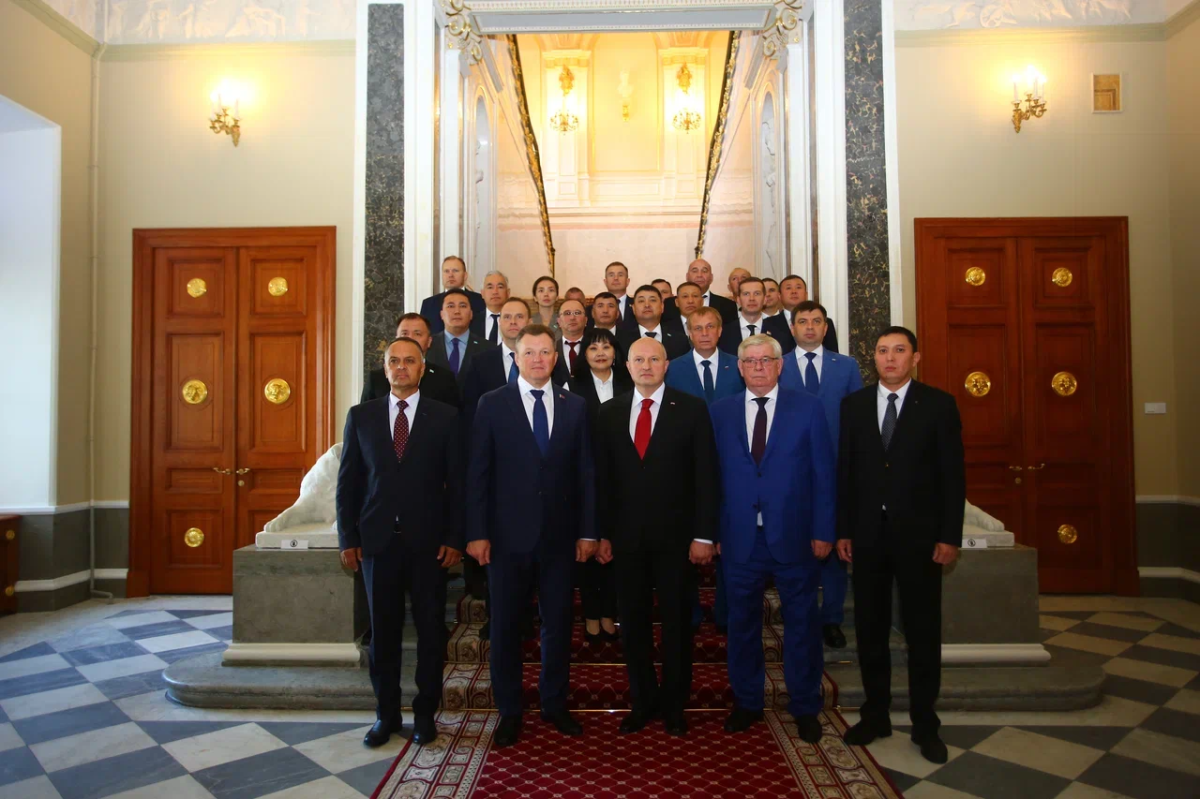
On June 30 – July 1, 2026, Saint Petersburg hosted a series of events chaired by Alexander Kurenkov, Minister of the Russian Federation for Civil Defence, Emergencies and Elimination of Consequences of Natural Disasters, with the participation of heads of the competent authorities of the CSTO member states responsible for emergency prevention and response.
The key events included the 17th Meeting of the Coordinating Council on Emergency Situations of the CSTO member states and large-scale interagency practical exercises on responding to man-made emergencies. The program also featured a review of personnel, an exhibition of emergency response equipment, and a graduation ceremony for cadets of the Saint Petersburg University of the State Fire Service of the EMERCOM of Russia named after Hero of the Russian Federation General of the Army Yevgeny Zinichev.
On June 30, the meeting of the Coordinating Council was attended by the heads of the emergency authorities of the Republic of Belarus, the Republic of Kazakhstan, the Kyrgyz Republic, and the Republic of Tajikistan, as well as representatives of the CSTO Secretariat headed by Acting Secretary General Valery Semerikov.
Opening the meeting, Alexander Kurenkov stressed that, amid the evolving global security environment, the continued development of collective measures to protect populations and territories from natural and man-made disasters is becoming increasingly important for the CSTO member states. He noted that for many years the Coordinating Council has served as an effective mechanism for exchanging experience and developing joint solutions, while unified approaches to civil defence and coordinated emergency response have laid a solid foundation for further cooperation.
Addressing the Council members, Acting CSTO Secretary General Valery Semerikov emphasized the need to further strengthen the legal and institutional framework for cooperation. He informed the participants that substantial progress had already been achieved in implementing the decisions of the CSTO Collective Security Council in such areas as military cooperation, counterterrorism, biological security, and combating illicit drug trafficking. Valery Semerikov proposed that the Coordinating Council on Emergency Situations be granted the status of an executive body of the Organization in the format of the Council of Heads of the Competent Authorities of the CSTO Member States for Emergency Situations. He noted that this would improve the speed of developing proposals and adopting decisions during emergencies, as well as ensure their mandatory implementation, which is particularly important given that natural and man-made emergencies may arise both in peacetime and during periods of heightened military-political tensions.
The participants reviewed the Council's activities over the past year, discussed the draft work plan for the coming year, and outlined priorities for medium-term planning. They also supported Acting Secretary General Valery Semerikov's proposal to develop a strategic planning document for the Council's activities in the medium term. Particular attention was given to the practical implementation of the Russian Federation's priorities during its 2026 CSTO Chairmanship in the field of emergency response.
The meeting also considered key activities planned for 2026, including:
-
the special exercise “Skala-2026” with emergency response units of the CSTO member states and the special exercise “Kobalt-2026” with special operations forces units of the CSTO Collective Rapid Reaction Forces, both to be held in the Republic of Tajikistan in October 2026;
-
the establishment of a CSTO Humanitarian Response Centre in the Republic of Tajikistan;
-
preparations for a joint CSTO–CIS–SCO conference on regional security, to be organized by the Russian side in November 2026.
Organizational matters were also discussed, including the rotation of the Council's chairmanship. It was decided that in 2027 the chairmanship would pass to the Committee for Emergency Situations and Civil Defence under the Government of the Republic of Tajikistan.
The heads of all delegations emphasized the importance of the constructive and trusting dialogue held in the spirit of alliance, reaffirming the unwavering readiness of the CSTO member states to assist one another whenever necessary.
The practical part of the program included large-scale interagency exercises on responding to the consequences of man-made emergencies, involving ambulance services, units of the National Guard and the Ministry of Internal Affairs of Russia, firefighting equipment, aircraft, and watercraft. The exercises demonstrated the high level of preparedness of the Russian emergency response system. The heads of delegations also visited an exhibition of modern firefighting and rescue equipment of the Saint Petersburg garrison.
On July 1, 2026, the heads of delegations and representatives of the CSTO Secretariat attended the graduation ceremony at the Saint Petersburg University of the State Fire Service of the EMERCOM of Russia named after Hero of the Russian Federation General of the Army Yevgeny Zinichev. Among the graduates were citizens of the CSTO member states who had completed specialized training in fire safety and emergency protection. Their participation in the ceremony underscored the importance of jointly training highly qualified personnel as one of the Organization's priority areas of cooperation.