At the Losvido training range in the Republic of Belarus, peacekeeping units practiced tactical procedures at a stationary checkpoint as part of the process of coordinating units and practicing joint actions during the command-and-staff exercise with the CSTO Peacekeeping Forces “Indestructible Brotherhood-2026”.
Today, at the Starodorozhsky training range in the Republic of Belarus, servicemen of the CSTO joint NBC protection and medical support formation began practical operations as part of the “Barrier-2026” special exercise.
Today, at the Losvido training range in Belarus, the CSTO Collective Peacekeeping Forces Commander was presented with a mandate to conduct a peacekeeping operation at the command post as part of the “Indestructible Brotherhood-2026” command-and-staff exercise.
Servicemen of the Combined Arms Army of the Central Military District (CMD) have arrived in the Republic of Belarus to take part in the command-and-staff exercise with the CSTO Peacekeeping Forces “Indestructible Brotherhood-2026” and the special exercise with the CSTO joint NBC protection and medical support formation “Barrier-2026”.
The 28th meeting of the Coordinating Council of Heads of Competent Authorities of the CSTO Member States on Combating Illegal Migration was held
 01.09.2025
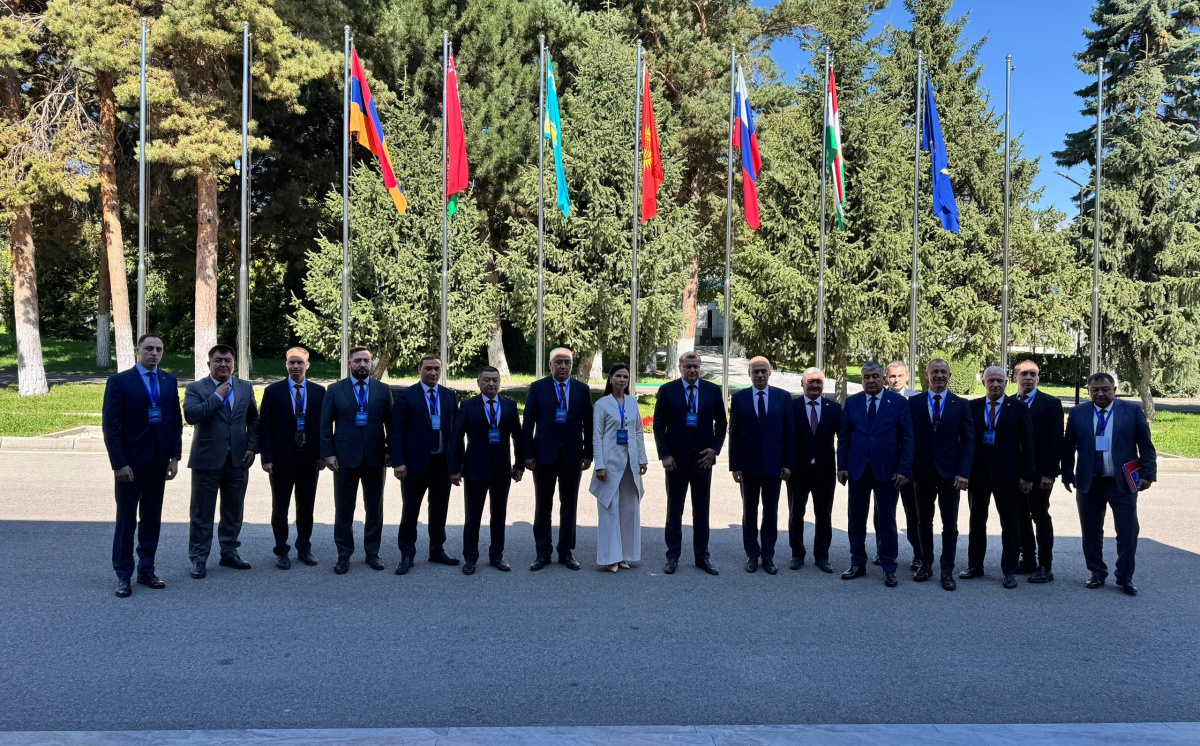
On August 28, 2025, in the city of Cholpon-Ata, the Kyrgyz Republic, the 28th meeting of the Coordinating Council of Heads of Competent Authorities of the Member States of the Collective Security Treaty Organization (CSTO) on Combating Illegal Migration was held.
The meeting was attended by delegations from the Ministries of Internal Affairs of the Republic of Belarus, the Kyrgyz Republic, the Russian Federation, the Republic of Tajikistan, representatives of the CSTO Secretariat, as well as the Anti-Terrorist Center of the Commonwealth of Independent States (CIS ATC).
The participants stressed the important role of the Coordinating Council in developing concrete joint solutions aimed at strengthening cooperation between the competent authorities of the CSTO member states in the field of combating illegal migration. The high efficiency of the annual CSTO regional operation "Illegal" was noted, contributing to the suppression of migration offenses and strengthening migration control at the national and interstate levels.
The CSTO Deputy Secretary General Valery Semerikov presented proposals for the development of a system of collective counteraction to illegal migration in the medium term, including improving the legal framework, digitalizing migration processes and expanding information exchange between the member states.
The current issues of the migration situation in the CSTO member states are considered. The results of the first stage of the CSTO's Illegal 2025 regional operation were summed up and priority areas for further cooperation were identified, including in the field of preventing illegal migration, identifying and suppressing the activities of criminal groups involved in illegal migration.
It was decided to elect Andrei Kikot, First Deputy Minister of Internal Affairs of the Russian Federation and Head of the Service for Citizenship and Registration of Foreign Citizens of the Ministry of Internal Affairs of Russia, as Chairman of the Coordinating Council for the next period.
Special attention was paid to the exchange of experience on the introduction of electronic administrative procedures (public services) in the migration sphere, as well as issues of interaction between migration and border authorities in the implementation of migration control.
A representative of the CIS Anti-Terrorism Center has informed the participants about the current situation in the field of countering terrorism and extremism in the Commonwealth of Independent States, noting the close link between illegal migration and security threats, including terrorist activities.
As a result of the discussions and hearing of the reports of the responsible officials, the final documents were signed, consolidating the decisions taken and defining plans for joint activities for the coming period.
The meeting was held in a constructive and businesslike atmosphere, which confirms the commitment of the CSTO member states to deepen cooperation in order to ensure migration security and sustainable development of the region.