Servicemen of the Combined Arms Army of the Central Military District (CMD) have arrived in the Republic of Belarus to take part in the command-and-staff exercise with the CSTO Peacekeeping Forces “Indestructible Brotherhood-2026” and the special exercise with the CSTO joint NBC protection and medical support formation “Barrier-2026”.
On October 7, 2026, the Fourth Counter-Terrorism Forum opened in Minsk (Republic of Belarus), bringing together the CIS Conference on Countering Terrorism and Extremism, the SCO Regional Anti-Terrorist Structure international scientific and practical conference, and joint counter-terrorism exercises.
October 7 marks the 24th anniversary of the signing of the Charter of the Collective Security Treaty Organization, which formalized the establishment of the CSTO as an international regional organization. The goals set out in the document, including strengthening peace and stability and collectively protecting the independence, territorial integrity and sovereignty of the member states, remain the foundation for developing mutually beneficial, truly allied cooperation. On this basis, the Russian Federation is chairing the CSTO in 2026 under the motto “Collective security in a multipolar world: a common goal, shared responsibility.”
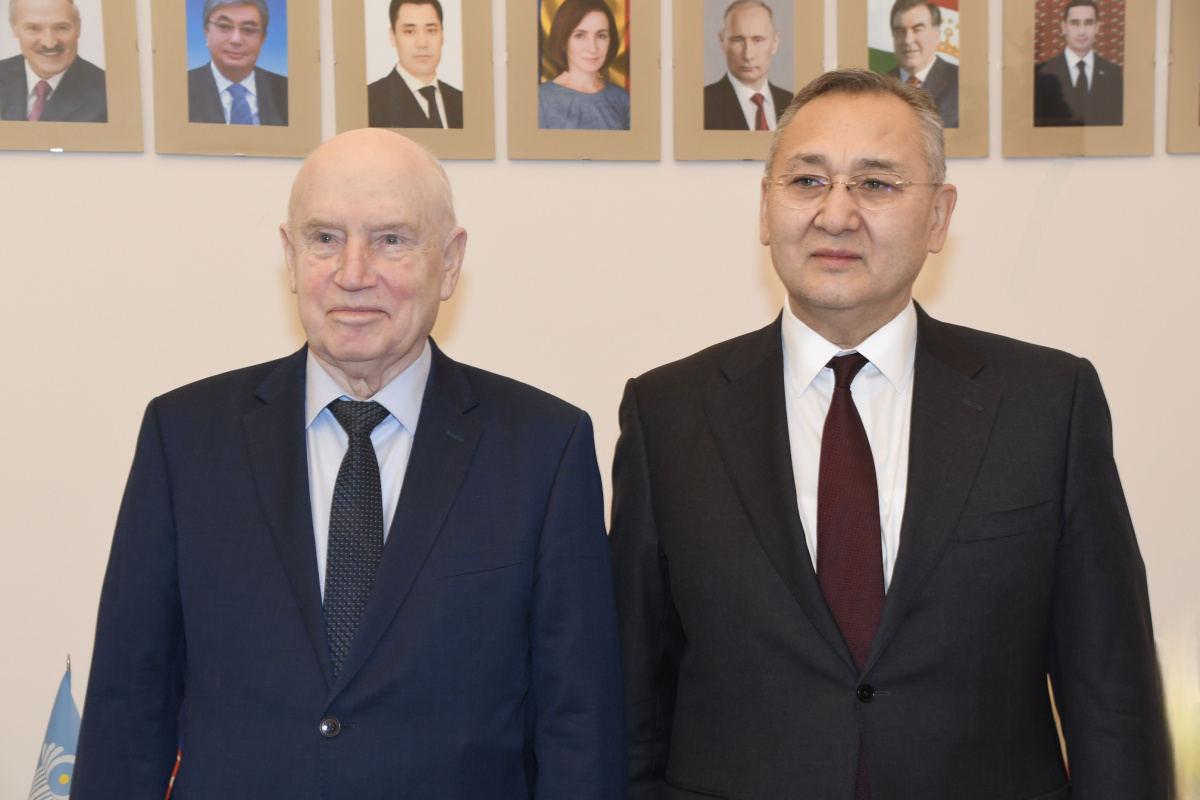
A working meeting was held between CSTO Secretary General Talatbek Masadykov and CIS Secretary General Sergey Lebedev
 27.01.2026
On January 20, 2026, a working meeting was held between CSTO Secretary General Talatbek Masadykov and CIS Secretary General Sergey Lebedev.
During the discussion, held in a friendly atmosphere, the heads of the executive bodies of the two Eurasian organizations exchanged views on current international and regional developments, as well as on the experience of both organizations in their priority areas of activity. In particular, they discussed issues related to the implementation of the Roadmap for the Development of Cooperation between the CSTO, the CIS, and the SCO for 2026–2028, signed at the meeting held on September 3, 2025, in Beijing, with a focus on aligning integration projects.
The senior administrative officials of the CSTO and the CIS unanimously expressed the view that regional organizations are called upon to play an important role in maintaining peace, preventing and overcoming instability, shaping a new Eurasian security architecture, and strengthening cooperation in the economic and humanitarian spheres.