Servicemen of the Combined Arms Army of the Central Military District (CMD) have arrived in the Republic of Belarus to take part in the command-and-staff exercise with the CSTO Peacekeeping Forces “Indestructible Brotherhood-2026” and the special exercise with the CSTO joint NBC protection and medical support formation “Barrier-2026”.
On October 7, 2026, the Fourth Counter-Terrorism Forum opened in Minsk (Republic of Belarus), bringing together the CIS Conference on Countering Terrorism and Extremism, the SCO Regional Anti-Terrorist Structure international scientific and practical conference, and joint counter-terrorism exercises.
October 7 marks the 24th anniversary of the signing of the Charter of the Collective Security Treaty Organization, which formalized the establishment of the CSTO as an international regional organization. The goals set out in the document, including strengthening peace and stability and collectively protecting the independence, territorial integrity and sovereignty of the member states, remain the foundation for developing mutually beneficial, truly allied cooperation. On this basis, the Russian Federation is chairing the CSTO in 2026 under the motto “Collective security in a multipolar world: a common goal, shared responsibility.”
The CSTO Acting Deputy Secretary General Samat Ordabayev took part in a special event on deradicalization at the CIS venue
 28.10.2025
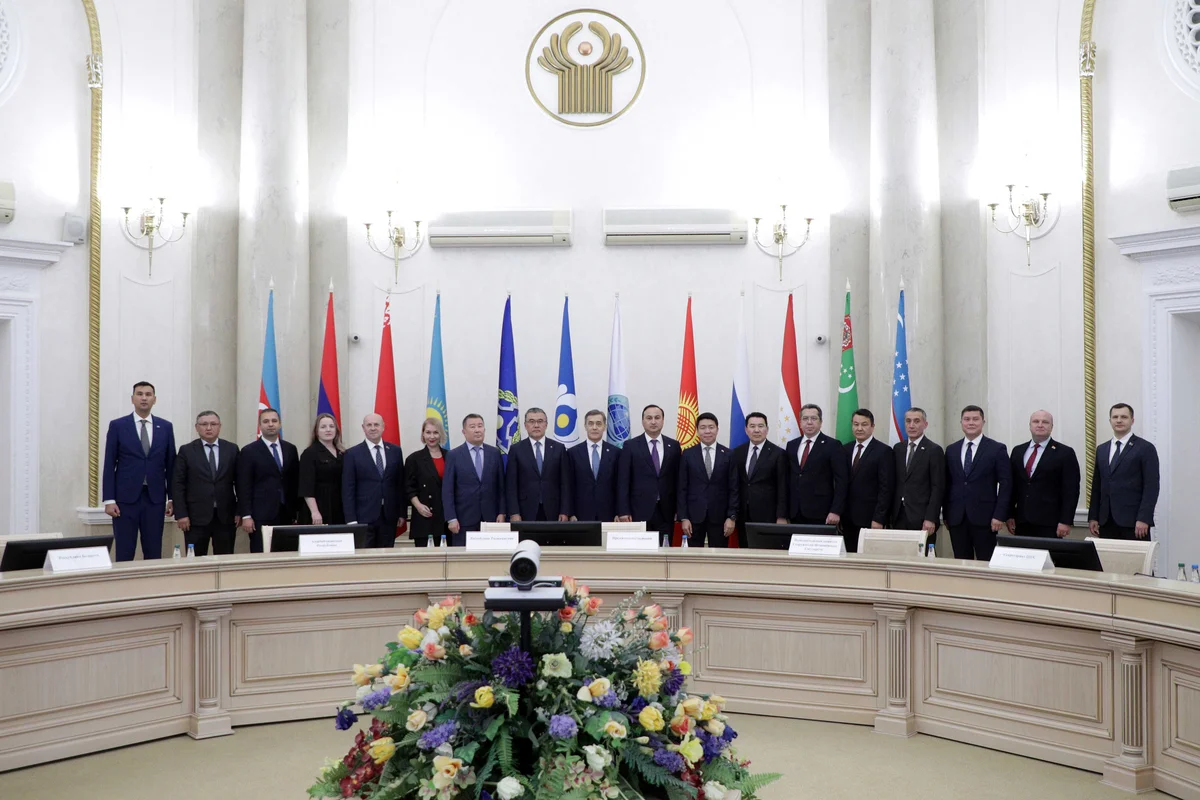
On October 28, 2025, at the headquarters of the CIS Executive Committee in Minsk, a special event was held on the topic “Synergy of the CIS, the CSTO, and the SCO approaches to deradicalization: challenges and opportunities.” The event was held under the chairmanship of the Republic of Tajikistan in the Commonwealth and was aimed at strengthening practical cooperation between the three leading regional organizations.
The forum brought together leading experts and heads of relevant agencies. The event was also attended by the SCO Secretary General Nurlan Yermekbayev, the CIS Deputy Secretary General Nurlan Seitimov, representatives of the CIS Anti-Terrorism Centre, the SCO Regional Anti-Terrorism Structure (RATS SCO), the UN Counter-Terrorism Office, as well as diplomats and experts from the member states.
Samat Ordabayev outlined the current security challenges in the CSTO space.
“We are seeing an increase in the number of regional conflicts and the emergence of qualitatively new challenges and threats to regional and global security. The proximity of “zones of instability” directly to the borders of our states is a cause for particular concern,” Samat Ordabayev stressed.
He also noted that the threat of international terrorism and related risks, including drug trafficking, cross-border movement of militants, and illegal financial transactions, was increasing significantly.
“In this context, cooperation and coordination of efforts between various regional organizations, primarily such as the CIS, the CSTO, and the SCO, appears to be extremely important in terms of strengthening the security space in Greater Eurasia,” the CSTO representative said.
Particular attention in the speech was paid to the prospects for institutionalizing cooperation between the three organizations. Samat Ordabayev highlighted the importance of the “Roadmap for the Development of Cooperation between the CIS, the CSTO, and the SCO”, signed by the secretaries-general of the organizations on the sidelines of the recent SCO summit. As a practical step forward, he proposed considering the creation of a coordination mechanism that would ensure constant interaction between the CIS, the CSTO, and the SCO in the field of deradicalization.
One of the outcomes of the event was a proposal to create an effective platform for sharing experiences, discussing current threats, and developing coordinated strategies to counter radicalization, especially among young people. The forum participants reached a common understanding of the need to strengthen cooperation between experts from the member countries of the three organizations in order to develop sustainable mechanisms for countering destructive ideologies.