On November 4, 2026, a working session entitled “The CSTO in Greater Eurasia: Current Status and Prospects” was held in Minsk as part of the 4th Minsk International Conference on Eurasian Security.
On November 3, 2026, the 4th Minsk International Conference on Eurasian Security was held in Minsk. The event was attended by President of the Republic of Belarus Alexander Lukashenko, Minister of Foreign Affairs of the Russian Federation Sergey Lavrov, CSTO Secretary General Talatbek Masadykov, CIS Secretary General Sergey Lebedev, SCO Secretary General Nurlan Yermekbayev, OSCE Secretary General Feridun Sinirlioğlu, representatives of the leadership of the foreign ministries of the Republic of Kazakhstan, the Kyrgyz Republic, the Republic of Tajikistan and a number of other states.
On October 30, 2026, the results of the “Channel-Caspian Lighthouse” subregional anti-drug operation were summed up as part of the implementation of the 2026 Plan of Key Activities of the Coordinating Council of Heads of Competent Drug Control Authorities of CSTO Member States (CCHCDCA).
From October 18 to 23 this year, in accordance with the 2026 Plan for the Joint Training of Command and Control Bodies and Formations of Forces and Assets of the Collective Security System of the Collective Security Treaty Organization, the “Cobalt-2026” special exercise was held at the Magob training range of the Special Purpose Units Training Center of the Ministry of Internal Affairs of the Republic of Tajikistan.
CSTO representatives take part in the 6th International Conference of the Russian Ministry of Internal Affairs on the spread of extremist ideology
 30.09.2026
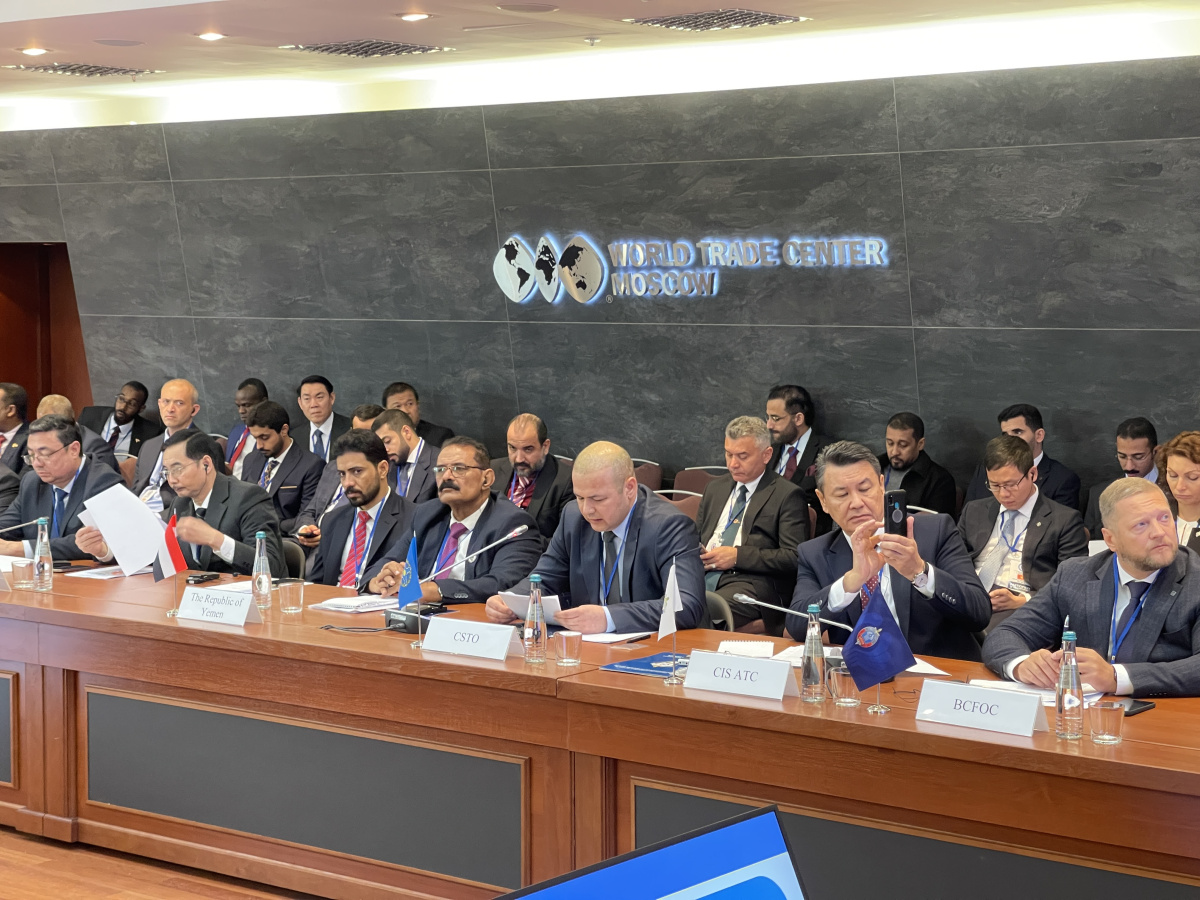
On September 29–30, 2026, the 6th International Conference of the Ministry of Internal Affairs of the Russian Federation on the spread of extremist ideology was held in Moscow. The CSTO delegation, comprising Umar Umarzoda, Head of the Department for Countering Challenges and Threats, and Igor Demchenko, Adviser to the Department, took part in the conference.
The event brought together heads of law enforcement agencies and representatives of international organizations from 23 countries and eight international and regional structures to develop coordinated approaches to countering modern security challenges.
Umar Umarzoda delivered a report entitled “The Problem of the Spread of Extremist Ideology in the CSTO Member States” at the plenary session. He emphasized that the spread of extremist ideology in the Organization’s member states remains one of the most acute and dangerous threats to regional and international security. To counter this threat, the CSTO has established an effective mechanism combining operational, preventive, legal and information measures.
Within the CSTO framework, a number of ongoing operations have been implemented that have demonstrated high effectiveness in practice: “Mercenary”, “Illegal” and “PROXY”. At the same time, countering extremism involves not only law enforcement and legal measures, but also systematic prevention, including raising the level of legal and civic awareness, working with young people, building resilience to destructive propaganda, developing critical thinking and media literacy, supporting traditional spiritual and moral values, and involving educational, cultural and public institutions in preventive activities.
Since the problem of extremism is transnational in nature, the CSTO advocates coordinated action not only within the Organization, but also in a broader international format, primarily in cooperation with the UN, SCO and CIS. Such cooperation makes it possible to share experience, develop common approaches and strengthen the legal and organizational foundations for combating radicalization.