On November 4, 2026, a working session entitled “The CSTO in Greater Eurasia: Current Status and Prospects” was held in Minsk as part of the 4th Minsk International Conference on Eurasian Security.
On November 3, 2026, the 4th Minsk International Conference on Eurasian Security was held in Minsk. The event was attended by President of the Republic of Belarus Alexander Lukashenko, Minister of Foreign Affairs of the Russian Federation Sergey Lavrov, CSTO Secretary General Talatbek Masadykov, CIS Secretary General Sergey Lebedev, SCO Secretary General Nurlan Yermekbayev, OSCE Secretary General Feridun Sinirlioğlu, representatives of the leadership of the foreign ministries of the Republic of Kazakhstan, the Kyrgyz Republic, the Republic of Tajikistan and a number of other states.
On October 30, 2026, the results of the “Channel-Caspian Lighthouse” subregional anti-drug operation were summed up as part of the implementation of the 2026 Plan of Key Activities of the Coordinating Council of Heads of Competent Drug Control Authorities of CSTO Member States (CCHCDCA).
From October 18 to 23 this year, in accordance with the 2026 Plan for the Joint Training of Command and Control Bodies and Formations of Forces and Assets of the Collective Security System of the Collective Security Treaty Organization, the “Cobalt-2026” special exercise was held at the Magob training range of the Special Purpose Units Training Center of the Ministry of Internal Affairs of the Republic of Tajikistan.
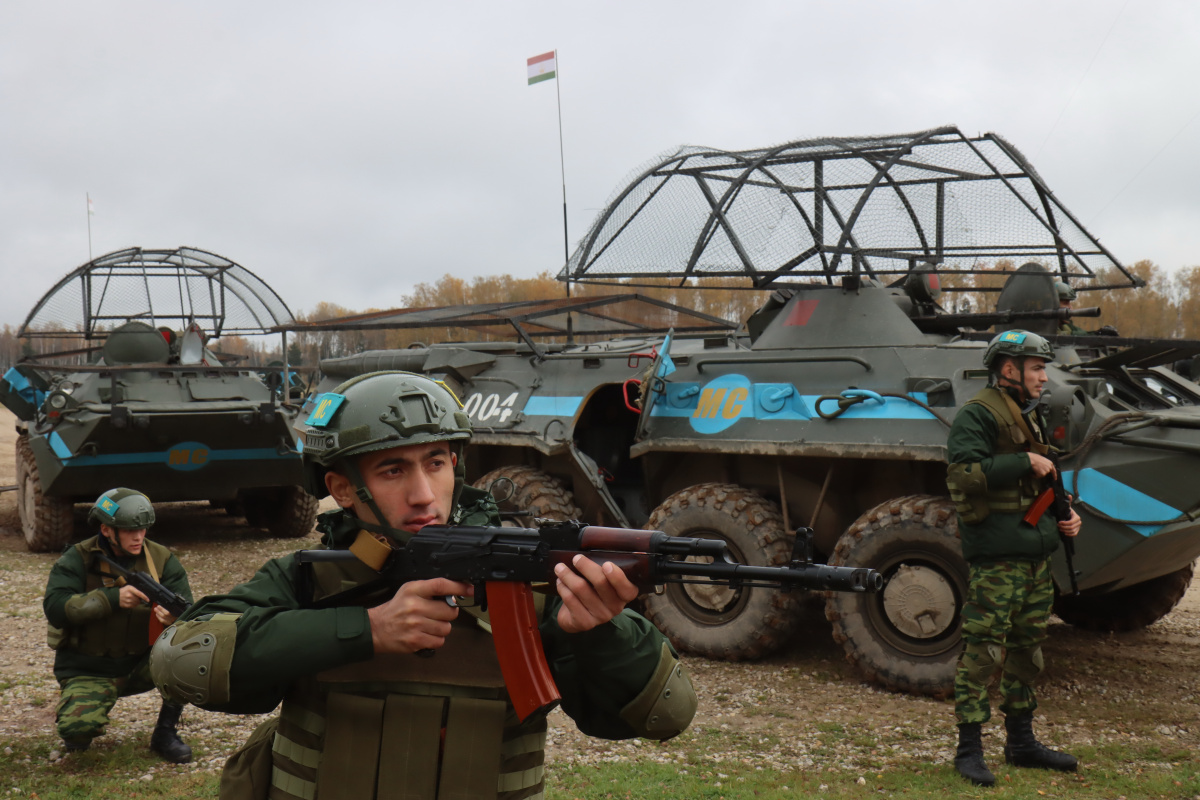
CSTO Peacekeeping Forces practice checkpoint procedures as part of the “Indestructible Brotherhood-2026” exercise
 14.10.2026
At the Losvido training range in the Republic of Belarus, peacekeeping units practiced tactical procedures at a stationary checkpoint as part of the process of coordinating units and practicing joint actions during the command-and-staff exercise with the CSTO Peacekeeping Forces “Indestructible Brotherhood-2026”.
Checkpoints are designed to enforce access control, ensure security and maintain public order, prevent unlawful activities, and detain offenders.
The main tasks of peacekeepers at checkpoints are to demonstrate the presence of peacekeeping forces to all parties to the conflict and to the local population in the area of the operation, monitor the situation in their area of responsibility, inspect and control the movement of people and vehicles, and prevent the smuggling of weapons, ammunition, explosives and other prohibited items.
A standard checkpoint has been set up at the Losvido training range, demonstrating modern approaches to organizing security. The facility includes several fortified firing positions providing reliable protection for peacekeepers. Areas have been designated for personnel and armored vehicles, enabling a rapid response to changes in the situation. Special zones have been equipped for vehicle inspections, while gates on both sides of the checkpoint and warning signs around its perimeter enhance security and ensure orderly operations.
The actions of peacekeepers during the “Indestructible Brotherhood-2026” exercise demonstrate the high level of readiness of the CSTO Peacekeeping Forces to carry out peacekeeping and security tasks. The skills practiced at the Losvido training range will enable them to operate effectively in real-world peacekeeping operations.
The Republic of Belarus is hosting the command-and-staff exercise with the CSTO Peacekeeping Forces “Indestructible Brotherhood-2026” and the special exercise with the CSTO joint NBC protection and medical support formation “Barrier-2026”.
The exercises involve contingents of the CSTO Troops (Collective Forces) from the Republic of Belarus, the Republic of Kazakhstan, the Kyrgyz Republic, the Russian Federation and the Republic of Tajikistan. These include military contingents, units of internal affairs bodies (police) and the National Guard, as well as operational groups from the CSTO Joint Staff and Secretariat. The Russian military contingent is primarily composed of units of the Combined Arms Army of the Central Military District.
In total, more than 1,500 servicemen and over 300 items of weapons, military and special equipment are involved, including approximately 80 different types of unmanned aerial vehicles (UAVs).