An international scientific and practical conference entitled “Transformation of the Global Security System and the Shaping of a Eurasian Security Framework” was held at Moscow State Linguistic University (MSLU).
Today, a conference entitled “The Role and Place of Media in CSTO Member States in Efforts to Contain Crisis (Emergency) Situations in Collective Security Regions” was held in Minsk.
An international scientific and practical conference entitled “The Situation in the Middle East, North Africa and the Sahara-Sahel Region: Development Forecasts for 2027” was held in Moscow, organized by the Center for Scientific and Analytical Information of the Institute of Oriental Studies of the Russian Academy of Sciences.
On October 18, 2026, the “Cobalt-2026” special exercise opened in the Republic of Tajikistan, in accordance with the 2026 Plan for the Joint Training of Command and Control Bodies and Formations of Forces and Assets of the CSTO Collective Security System. The exercise involves special units of internal affairs and national security agencies, internal troops (National Guard), special services and anti-drug agencies, as well as rescue units incorporated into the Special Purpose Forces formations of the CSTO Collective Operational Reaction Forces (CORF).
From October 13 to 16, 2025, the 23rd International Combat Sambo Tournament for the Cup of the Secretary General of the Collective Security Treaty Organization, featuring law enforcement personnel from CSTO member states, was held at the Ognikovo Park Hotel (19 Ognikovo, Istra District, Moscow Region).
Battlefield archaeology activities of the Military Historical Museum of the Armed Forces of the Republic of Kazakhstan
30.01.2020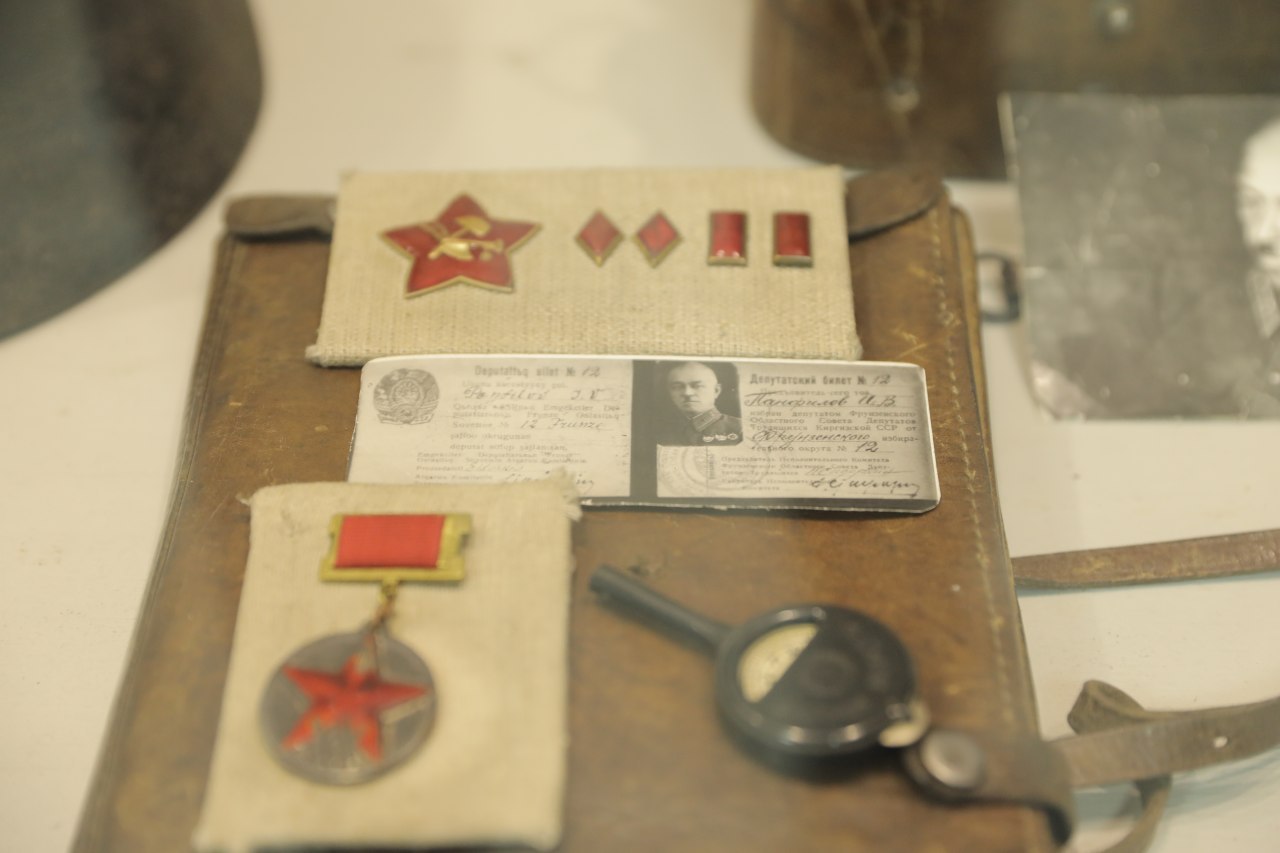
The battlefield archaeology department of the Military Historical Museum of the Armed Forces of the Republic of Kazakhstan conducts the search and archival work of search information about Kazakhstan soldiers who were missing or killed in action upon the Great Patriotic War.
In 2020, we celebrate the 75th anniversary of the Victory in the Great Patriotic War. Over a number of years, information about the exact location of the military graves of their ancestors remained unavailable to most Kazakh families, and so far more than 100 thousand Kazakhstan soldiers have been reported dead or missing in action.
To achieve battlefield archaeology goals, we’re using databases with the information about soldiers missing and killed in action, internet resources and previously confidential sources from CIS and foreign countries. Including foreign archives and unclassified reports on irreplaceable combat losses of the Red Army in 1941 – 1945 years.
In addition, joint work is being conducted with regional historical and local historical museums, archives, research scientists, archivists, battlefield archaeologists non-governmental organization “Atamnyn Amanaty” and local military administrative bodies.
As of January 2020, the Military Historical Museum of the Armed Forces of the Republic of Kazakhstan received 556 applications from relatives of the war veterans. According to 48 applications, the information on the location of the primary burials has been established.
38 of them are located in the Russian Federation (Rostov Region, Matveevo-Kurgan District; Oryol Region, Ulyanovsk Region; Karelo-Finnish SSR, Petrovsky District, etc.);
4 - on the territory of Hungary (v. Mike-Perch, western outskirts);
2 - in Latvia (Karsaevsky county);
2 - in Germany (Brandenburg, the village of Neu-Levin, mass grave);
1 - in Poland (Masovian settlement);
1 - Belarus (Polesie region);
From 3 to 5 applications are received daily.
According to an experienced battlefield archaeologist with forty years of experience, the commander of the search squad “Memorial Zone”, Maidan Kusainov, there are numerous methods for searching for missing soldiers: from archive-field works to Internet search. Now various groups and communities in social networks are becoming a powerful resource in resolving the issue of finding fallen warriors.
The department plans include improvement of battlefield archaeology activities and perpetuating the memory of returned names by organizing trips to the burial places in the CIS and European countries, giving tribute to honored dead and conducting the last military ceremonies for heroes, who had won the Great Victory for all of us.
https://www.gov.kz/memleket/entities/mod/press/news/details/poiskovo-ekspedicionnaya-deyatelnost-voenno-istoricheskogo-muzeya-vs-rk?lang=ru